
long
Welcome to your NodeBB!
General DiscussionWelcome to your brand new NodeBB forum!
This is what a topic and post looks like. As an administrator, you can edit the post's title and content. To customise your forum, go to the Administrator Control Panel. You can modify all aspects of your forum there, including installation of third-party plugins.
Additional Resources
Pofetl
AboutThe mission of Pofetl is to upgrade our society to Democracy 2.0!
Our current representative democracy is Democracy 1.0. After a representative is elected, voters have almost no control over their representatives. In theory, representatives can vote however they want.
Democracy 2.0 means that representatives fully represent voters in their districts. For each bill, voters in districts will deliberate and vote after deliberation. Their representatives will faithfully follow the voting results in their districts, being Pofetl Compliant.
Democracy 1.0 is a compromise due to technical limitations. In order to have discussions, people had to come together in a common area. Democracy 1.0 had to use representatives instead of voters to form a legislature.
With the Internet and the technology of Pofetl, all voters can discuss problems at any time, in any place, and they can cast verifiable votes freely. This makes Democracy 2.0 possible.
Democracy 1.0 has failed from theory to reality. There are four ways to spend money. In Democracy 1.0, representatives spend tax dollars on other people, or model 4. That's why the representatives are so out of touch -- the economic model determines they don't care. Even worse, they have the desire to convert part of model 4 to model 3, so that they benefit from spending tax dollars. This is corruption.
The same applies to other government controlled resources, like safety and natural resources, etc.
But in Democracy 2.0, voters become the de facto legislature branch, which controls the resources shared by all the people. The economic model becomes model 1, that is, the people spend their own money on themselves, which is the most efficient way of spending.
The American Dream about the government is that the government is of the people, by the people and for the people. With Democracy 2.0, this American Dream will become true for the first time.
Prop 47 and Prop 57
CaliforniaWhat do you think about Prop 47? Should we keep it or repeal it or modify it?
What do you think about Prop 57? Should we keep it or repeal it or modify it?
Please share your opinion.
AD 26 comprises of Alviso, Cupertino, Santa Clara, Sunnyvale and some of North San Jose. Please see https://www.wedrawthelinesca.org/map_viewer for detail.
I am a Software Engineer and fist generation immigrant. I have had no political experience before. Please DM me if you can provide any help.
My platform has determined that I will run as independent.
My plan is to upgrade the Democracy we are practicing without violating or changing existing laws.
I call current Democracy 1.0. Democracy 1.0 is a wholesale deal. Voters elect representatives to fully represent them in the Legislature. In theory, representatives can vote however they want.
Democracy 1.0 causes problems in theory and in reality.
There are only four ways of spending money:
- You spend your own money on yourself. Our everyday life falls in this model. And it's the most efficient way of spending money.
- You spend your own money on someone else. Think of giving gifts for a coworker's baby shower. You tend to not care about the gift, with staying under the budget being your main concern.
- You spend someone else's money on yourself. This can be legal. For example, if you're on a business trip, your company can compensate for meals. You tend to spend as close to the limit as possible.
- You spend someone else's money on someone else. You tend to not care about how much you spend and how the money is spent. Unfortunately, our Government falls in this model in Democracy 1.0.
The case is not only limited to money, but to everything, like natural resources and even the safety of the society. Even worse, representatives are trying to convert some resources from Model 4 to Model 3, which is they can benefit from the resources they control for all the people. That's why most people think their representatives are out of touch.
In my opinion, people chose Democracy 1.0 with representatives due to technical limitations. In the past, the only way people were able to communicate efficiently is to come together so they can hear each other directly.
But times have changed. With the Internet, people can freely discuss issues online at any time and any place.
My platform is that I have two promises.
- Once elected, I'll post all the bills I am going to vote on in advance so people may deliberate them. Voters in my district can vote on each bill after deliberations. I'll provide a platform for discussion and voting.
- My official vote will always go with the result of the voters in my district. I will faithfully represent voters in my district.
I have my own opinion on everything, but my opinion isn't more important than a regular voter in my district. I'll accept the results if it doesn't go my way.
I call candidates or representatives who made these two promises as Democracy 2.0 candidates or representatives. Democracy 2.0 is a retail detail. People can get involved in any topic they are interested while leave those they are not interested in to their representatives and neighbors.
In this way, people become the de-facto law makers. All the voters together can be considered as all the people. All the people control how to spend our tax dollars on all the people, how to deal with the environment they live in for all the people. As a result, the legislative branch becomes Model 1: The people spend their tax dollars on themselves. (Please replace tax dollars to other resources.) This is the most efficient model in economics.
Democracy 2.0 can apply to any level of the legislative branch, no matter if they are School Districts, City Councils, State Assemblies and Senates, or the Congress.
It will also be the first time to fulfill an American dream: the Government should be of the people, for the people and by the people.
If you are tired of partisan politics, vote for Democracy 2.0 candidates. If you are tired of special interest controlled representatives, vote for Democracy 2.0 candidates. If you know our current system need to change, but don't know how to change it, Democracy 2.0 is the answer for you. If your favorite candidates are not yet Democracy 2.0, demand them to be one.
Now let's start to upgrade our society.
Together let's upgrade to Democracy 2.0!
Pofetl Complaint Candidates
AnnouncementsThe mission of Pofetl Inc is to upgrade our society to Democracy 2.0.
To achieve this mission, we urge all candidates for legislative branch, no matter which level you are running for, School Districts, City Councils, State Assemblies and Senates, or the Congress, to declare to be Pofetl Complaint.
Pofetl Complaint incudes two promises:
- After elected, Pofetl Complaint Representatives should publish all the bills they are going to vote on pofetl.com in advance. People can deliberate on all of them, and they can vote on each of them after deliberation.
- In official votes, Pofetl Complaint Representatives should always vote according to the result of their districts. In other words, Pofetl Complaint Representatives will faithfully represent voters in their districts regardless their own opinion.
List of Pofetl Complaint candidates or representatives:
- Long Jiao, candidate for California Assembly Member.
To Democracy 2.0!
BlogsMy name is Long Jiao. I am a Software Engineer and fist generation immigrant. I have had no political experience before. Please contact me if you can provide any help.
I am running for State Assembly of AD 26. Ask me anything @ longforassembly@gmail.com.
AD 26 comprises of Alviso, Cupertino, Santa Clara, Sunnyvale and some part of San Jose. Please see https://www.wedrawthelinesca.org/map_viewer for detail.
I will run as a Democrat.
My plan is to upgrade the Democracy we are practicing without violating or changing existing laws.
I call current Democracy 1.0. Democracy 1.0 is a wholesale deal. Voters elect representatives to fully represent them in the Legislature. In theory, representatives can vote however they want.
Democracy 1.0 causes problems in theory and in reality.
There are only four ways of spending money:
- You spend your own money on yourself. Our everyday life falls in this model. And it's the most efficient way of spending money.
- You spend your own money on someone else. Think of giving gifts for a coworker's baby shower. You tend to not care about the gift, with staying under the budget being your main concern.
- You spend someone else's money on yourself. This can be legal. For example, if you're on a business trip, your company can compensate for meals. You tend to spend as close to the limit as possible.
- You spend someone else's money on someone else. You tend to not care about how much you spend and how the money is spent. Unfortunately, our Government falls in this model in Democracy 1.0.
The case is not only limited to money, but to everything, like natural resources and even the safety of the society. Even worse, representatives are trying to convert some resources from Model 4 to Model 3, which is they can benefit from the resources they control for all the people. That's why most people think their representatives are out of touch and even corrupted.
In my opinion, people chose Democracy 1.0 with representatives due to technical limitations. In the past, the only way people were able to communicate efficiently is to come together so they can hear each other directly.
But times have changed. With the Internet, people can freely discuss issues online at any time and any place.
My platform is that I have two promises.
- Once elected, I'll post all the bills I am going to vote on in advance so people may deliberate them. Voters in my district can vote on each bill after deliberations. I'll provide a platform for discussion and voting.
- My official vote will always go with the result of the voters in my district. I will faithfully represent voters in my district.
I have my own opinion on everything, but my opinion isn't more important than a regular voter in my district. I'll accept the results if it doesn't go my way.
I call candidates or representatives who made these two promises as Democracy 2.0 candidates or representatives. Democracy 2.0 is a retail deal. People can get involved in any topic they are interested while leave those they are not interested in to their representatives and neighbors.
In this way, people become the de-facto law makers. All the voters together can be considered as all the people. All the people control how to spend our tax dollars on all the people, how to deal with the environment they live in for all the people. As a result, the legislative branch becomes Model 1: The people spend their tax dollars on themselves. (Please replace tax dollars to other resources.) This is the most efficient model in economics.
Democracy 2.0 can apply to any level of the legislative branch, no matter if they are School Districts, City Councils, State Assemblies and Senates, or the Congress.
It will also be the first time to fulfill an American dream: the Government should be of the people, for the people and by the people.
If you are tired of partisan politics, vote for Democracy 2.0 candidates. If you are tired of special interest controlled representatives, vote for Democracy 2.0 candidates. If you know our current system need to change, but don't know how to change it, Democracy 2.0 is the answer for you. If your favorite candidates are not yet Democracy 2.0, demand them to be one.
Now let's start to upgrade our society.
Together let's upgrade to Democracy 2.0!
Patent pending Pofetl Voting Platform has following features:
- Voters are verified with two-factor authentication.
- A verification code is generated for voter after voting. The voters can use the verification code to verify their votes without worry about leaking privacy information.
- Final results as well as all the ballots identified by the verification code can be published after the voting period.
It's much safer than current voting systems. Voters can be confident with the result because they can verify the results themselves.
This is the text of AB 1400. This is the text of ACA 11.
Below is the incomplete list of reports for the bills. • ACA 11: California Constitutional Amendment Would Double Taxes (based-politics.com) • California Revisits Offering Universal Health Care, Despite No Clear Plan to Pay for It (msn.com) • Universal health care bill advances in California Assembly | AP News • Single-payer health care: what Californians need to know - CalMatters
Myths about California Universal Health Care System
- Health Care is a right.
- False. Rights are given by God, not granted from the Government. The government can only protect rights.
- AB 1400 and ACA 11 will almost double the state tax.
- Both True and False.
i. True: All health care expenses will be in the form of tax, which is almost the current level of state tax. ii. False: At the same time, employers and individuals don’t have to pay for health insurance and premiums and copayments, so it’s a trade of above payments to the form of state tax. But we don’t know the amount of current payments would be the same, more than or less than the proposed state tax.
- AB 1400 and ACA 11 will reduce the total medical expense of all Californians
- Unknown. There is no real number to support either claim, but currently all state run programs are wasteful and inefficient. Upgrading to Democracy 2.0 will help make the claim true.
- AB 1400 and ACA 11 will eliminate all private medical insurances in California
- Mostly true. Depends on the program. In the UK, which is a single payer system, some private medical insurances are still available. Most private medical insurance companies will disappear in California for sure. Some businesses which are both insurers and medical providers won’t survive in single payer system.
What’s missing in AB 1400 and ACA 11 In the proposed health care system, there are givers and takers. When there are more givers than takers (in terms of amount of money), the system runs better and better. When there are more takers than givers, the system will degrade and eventually broken down.
What should be done when there are more takers? Will the givers give even more to meet ends?
According to AB 1400, switching to Universal Health Care System is based on a report BEFORE the system is implemented, or make the major switch based on hypothetical data only. It’s very irresponsible and won’t go well.
My Proposal Instead of establishing a full Universal Health Care System, proposed CalCare should start as an alternative Government run Medical Insurance, which competes with existing medical insurances. CalCare should cover State employees and retirees first. It’s a large enough pool to support a medical insurance to run and figure out the cost for the coverage. It should be open to all California residents, and private company employees can also switch to CalCare voluntarily.
By doing so, we can collect real data for the cost. Since all the participants will contribute, CalCare should have surplus. The surplus should provide to expand Medicare and County healthcare systems. If CalCare works as expected that it reduces overall cost and participants’ medical expense, most if not all California residents will switch to CalCare. And the surplus of CalCare will elevate Medicare or equivalent system to the same level of quality as CalCare.
Winning by competition is much better than by mandate.
This is the text of AB 2098, which was introduced by Assembly Member Evan Low.
SB 9: The California Home Act
CaliforniaSB 9 took effect on 01/01/2022. What's your opinion about it?
Bond Measure 2022
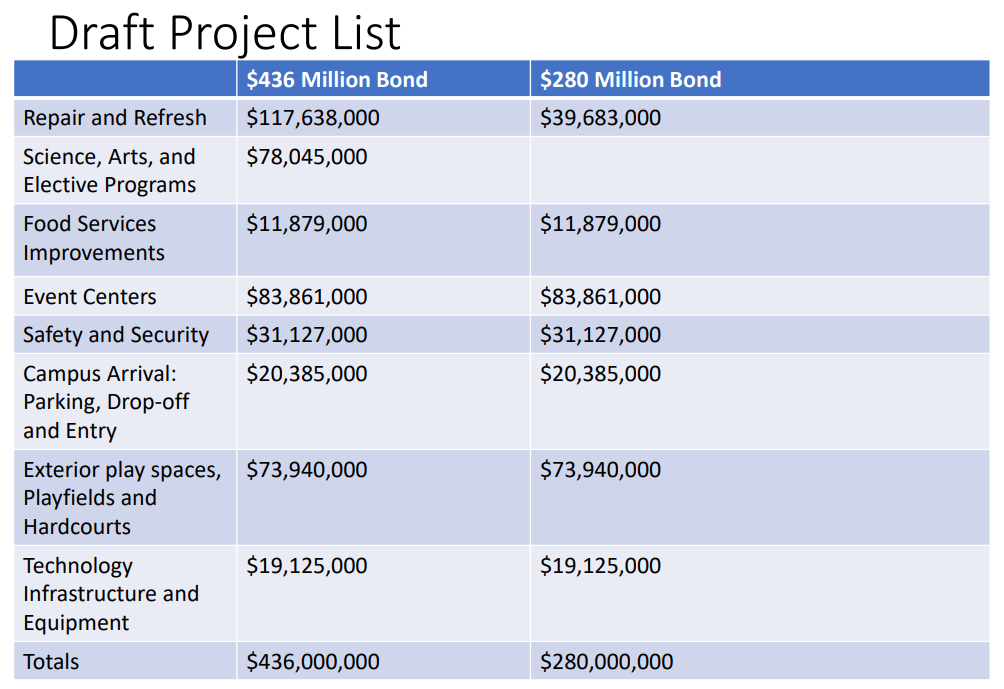
Cupertino Union School DistrictCUSD board is planning to have a bond measure for 2022 general election. Here is the detail for two plans.
How do you support the two plans and the proposed projects?
Poll Results for AD-26 in August 2022
CaliforniaBelow is the summary of the results.
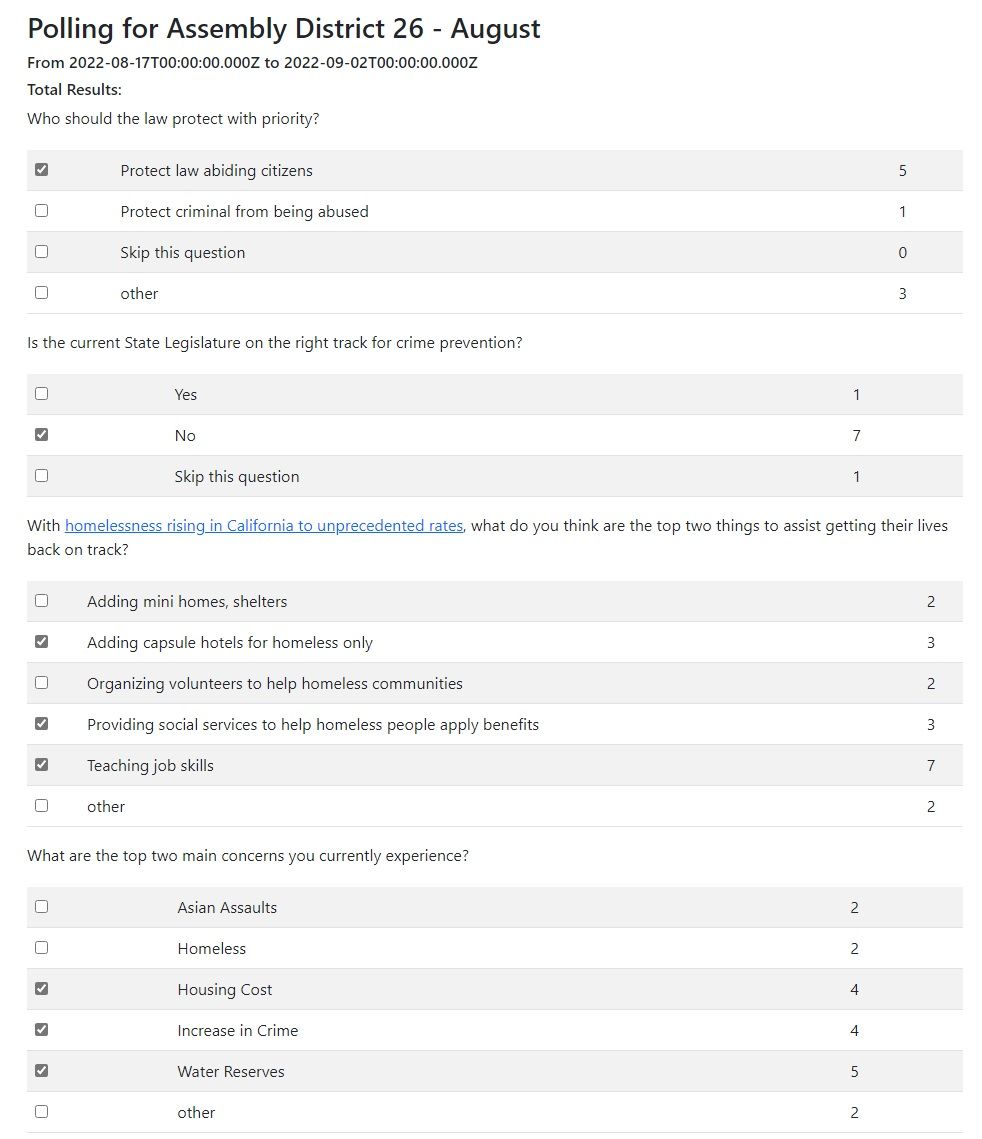
Please see here for detailed voting results.
California's Dilemma for "Petty Theft"
CaliforniaSince Prop 47, California changed many crimes, especially property "thefts", into misdemeanors. Those so called "Petty theft" are essentially not punished.
There are many reasons resulted this change. One of them is that incarceration is very expensive.
Sure, by not incarcerating at all the government can save some money. But the cost is pushed to normal people.
California falls into a dilemma: it costs government money if punishing "petty theft" by incarceration; it costs people's property and safety if not punishing at all.
But the people and the government has social contract: the people pay taxes and obey the laws and the government should maintain social order for the community. Now by not maintaining the social order, the government broke the social contract.
Poll Results for AD-26 in October 2022
CaliforniaThis is the summary of the results.
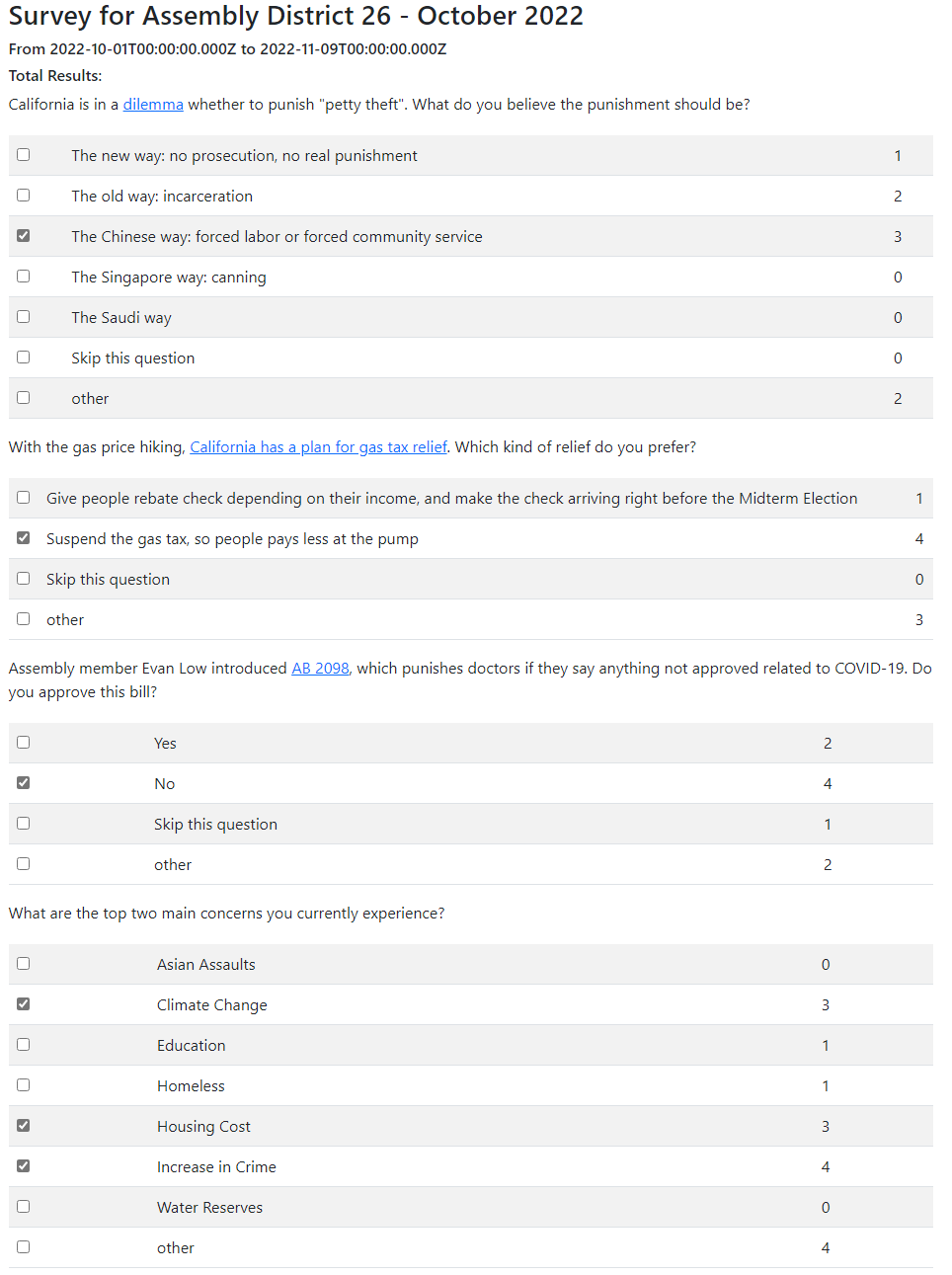
Please see the detailed results here.
California Gas Tax Relief 2022
CaliforniaGas price went up significantly in 2022. CA legislature had two plans to give California people a relief:
- Suspend the gas tax, so people pays less at the pump
- Give people a rebate check depending on their income, and the rebate check conveniently arrives right before the Midterm Election
The legislature passed the second plan. Which plan do you prefer?
There are two representation modes: trustee model of representation and delegate model of representation.
Almost all the current representatives are in the trustee model of representation. People are familiar with this model since the beginning of Democracy. But people chose this model not because it is good, but because they had to use this model due to technical limitations.
Representatives need to make laws and policies. They need to 1. communicate to each other efficiently, 2. vote quickly. In the old days, people have to stay in the same room to achieve both. Democracy system had to use representatives and representatives had to run on trustee model of representation due to the technical limitations.
But with today's technology, people can communicate and vote online which can overcome the two requirements easily. Current law still requires representatives. But representatives can run on delegate model of representation, so the constituents make the decision directly.
Cupertino Budget Crisis
City of CupertinoAbout 40% of the City of Cupertino's revenue comes from sales taxes. But with a state audit, the sales tax revenue is estimated to drop 73% this year, from $42.1 million to $11.4 million, a $30.7 million change. The City of Cupertino's budget will change from surplus to deficit. See staff report for details.
Below is a screen shot of the staff report.
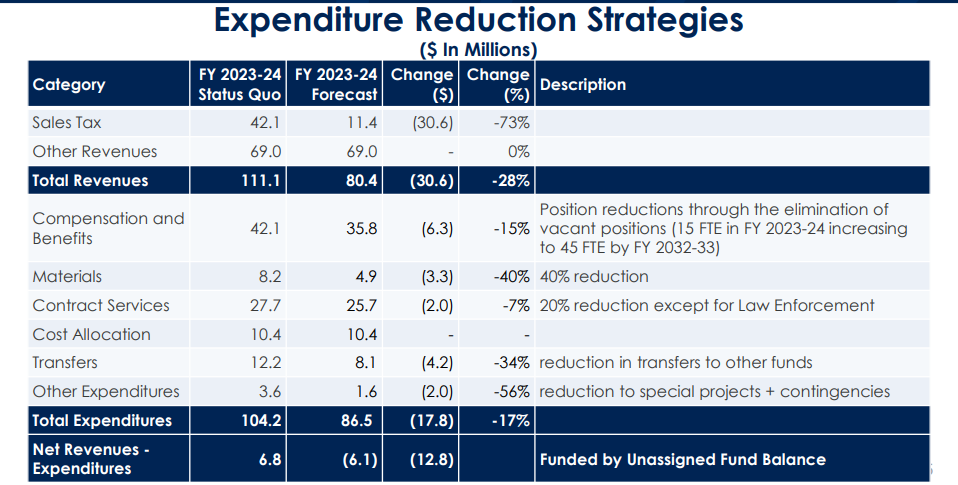
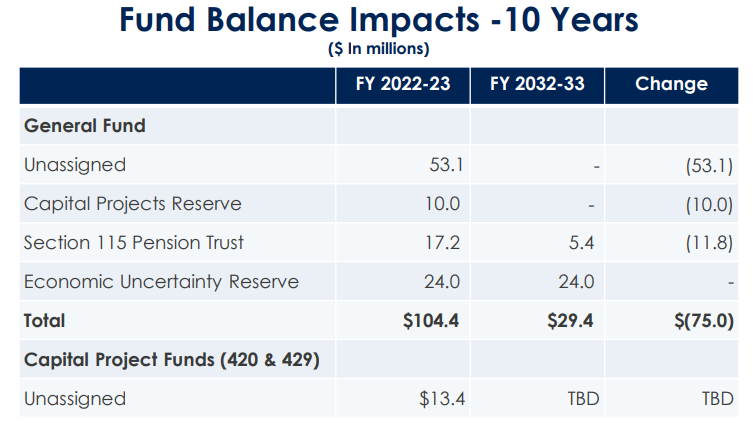
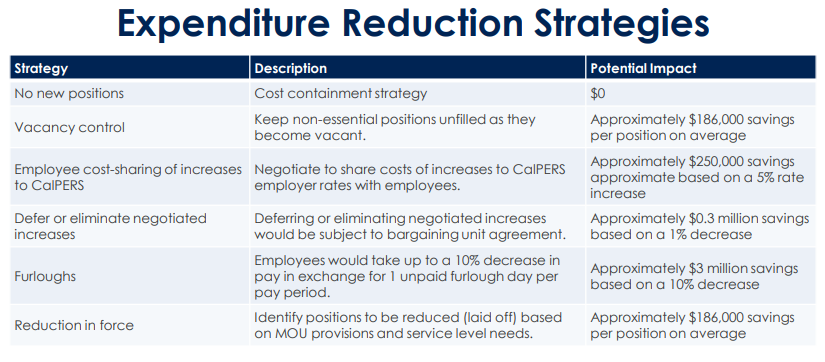
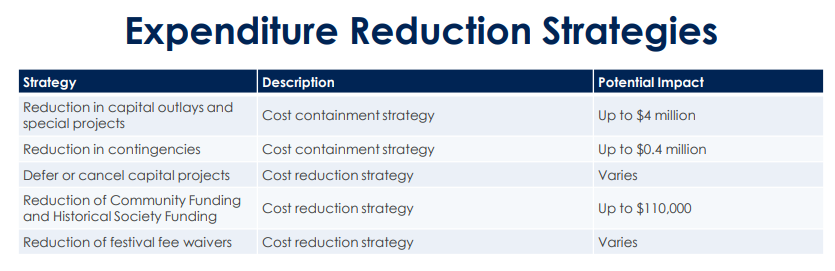
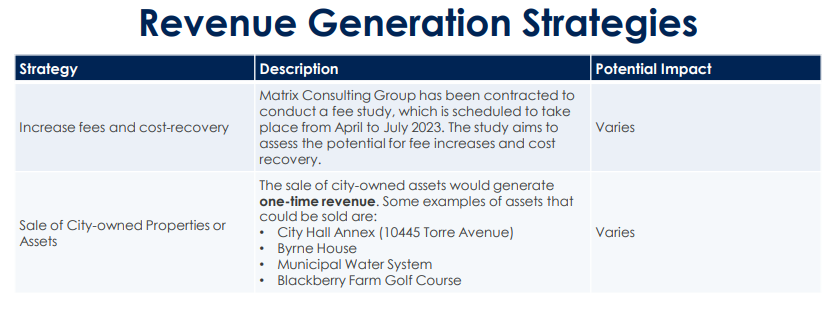
The city offered three strategies: reduce fund, cut expenditure and increase revenue.
Below is a screen shot of fund reduction.
Below are screen shots of expenditure reductions.
Below are screen shots of increasing revenue.
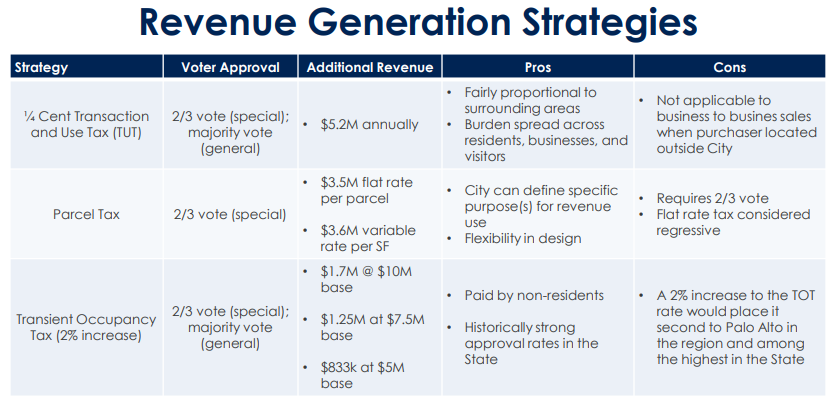
The City of Cupertino is conducting a survey. How should Cupertino balance its budget?
Below are some ideas not offered in the city survey above.
- A hiring freeze while the budget is in deficit. The Staff per 1000 residents ratio is at all time high (3.40). How about scale it back to FY 14-15 level (2.62)?
Given the population is 60,869 in FY2023-24, we can save 47 to 52 positions. Each position costs about $186,000 per year (See Expenditure Reduction Strategies above). The saving is about $8,742,000 to $9,672,000 per year.
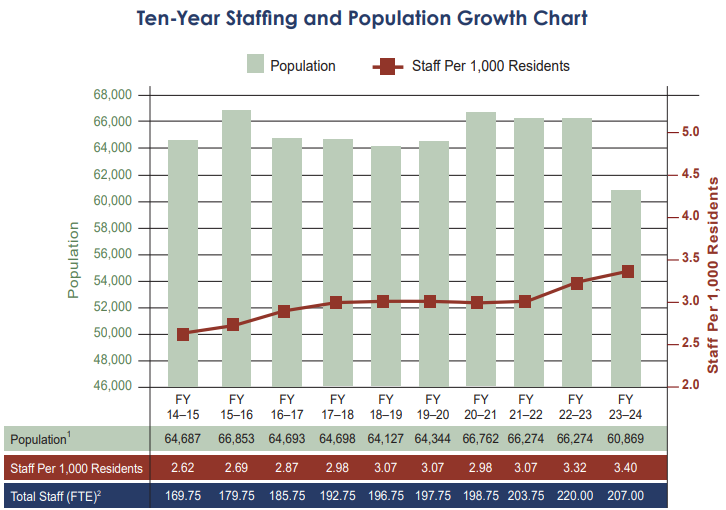
Note: Cupertino Budget At A Glance for FY23-24 shows 207 total staff for FY23-24, while page 42 of Cupertino Adopted Budget for FY23-24 shows 212 total staff. The Budget At A Glance shows 10% population reduction for FY23-24. I don't know whether this is accurate. So used previous year's population number for calculation.
- Freeze city staff salaries and benefit unless the budget is balanced or has a surplus. This will encourage city staff to pursue a balanced budget as well.
- Cupertino pays Santa Clara County Sheriff each year for law enforcement services. But cities like Sunnyvale (larger than Cupertino) and Campbell (smaller than Cupertino) have their own police department. Should Cupertino study the strategy to have its own police department?
Cupertino Reserving $56.5 Million to Repay Tax from Apple Sales
The related survey can be found here.
Cupertino City Hall
City of CupertinoCupertino City Hall was designed and built in 1965. The size is about 24,140 square-foot (indicated here). It doesn't meet the current building standards. Please see here for more information. We need to do something to make it meet current standards.
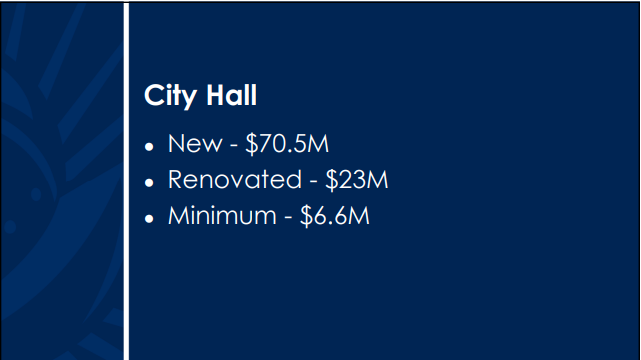
There are three options according to a 04/30/2019 report:
- Building new City Hall - $70.5M
- Renovated - $23M
- Minimum - $6.6M
Neighboring city Sunnyvale just built a new 120,000 square-foot City Hall. And the first phase cost was about $315M (see here). So the per square-foot cost is about $2625.
On 11/15/2022, Cupertino City Council directed the staff to include the City Hall Renovation with $27.5M to next FY budget (see here).
On 02/11/2023, the new City Council preferred a new 80,000 square-foot City Hall. If we take the Sunnyvale new City Hall's per square-foot cost number, the cost would be $210M, which is much more than proposed $70.5M.
New City Hall was included in the FY 2023-24 five year plan for CIP.
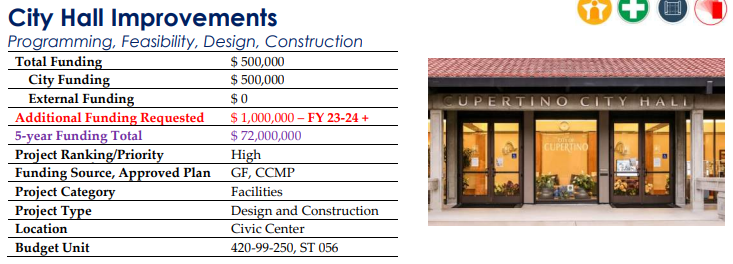
Given Cupertino is in a budget crisis, which option for the City Hall do you think Cupertino should take?
City Hall appeared on the agenda of 10/17/2023 as item 7: "Direct staff to pursue conceptual development of a mixed used Public Private Partnership for City Hall and the Sports Center properties".
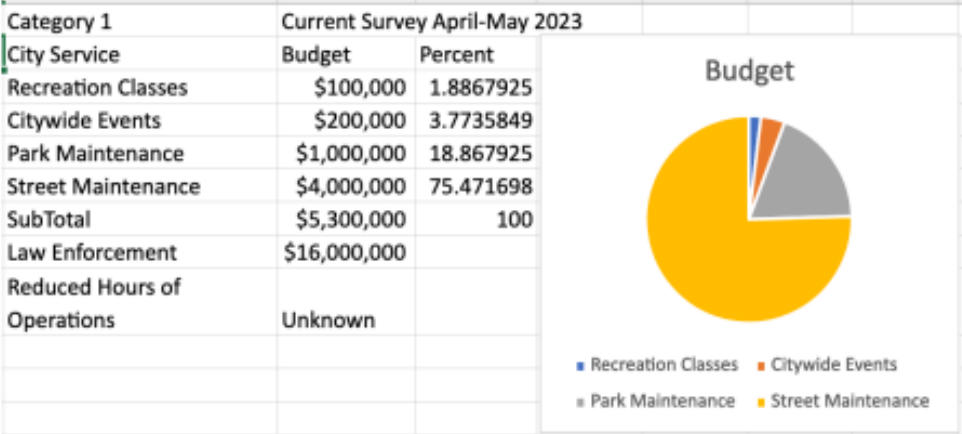
Cupertino City 2023 Community Budget Survey
City of CupertinoCupertino City published a Community Budget Survey to get community input for the budget crisis.
But the survey only covered a small portion of total budget.
A House Divided
City of CupertinoThe Civil Grand Jury of Santa Clara County published a report A House Divided: Cupertino City Council and City Staff.
The report shows there is a tension between the City Councilmembers and the city staff.
City of Cupertino hired Linda Daube to investigate issues raised in the report. Linda returned to the Council with her Fact Finding Report.
In the City Council Meeting of 5/9/2023, the council majority (Mayor Hung Wei, Vice Mayor Sheila Mohan, and Councilmember J.R. Fruen) made some unpreceded decisions, including
- Remove all committee assignments from Councilmember Chao and Councilmember Moore.
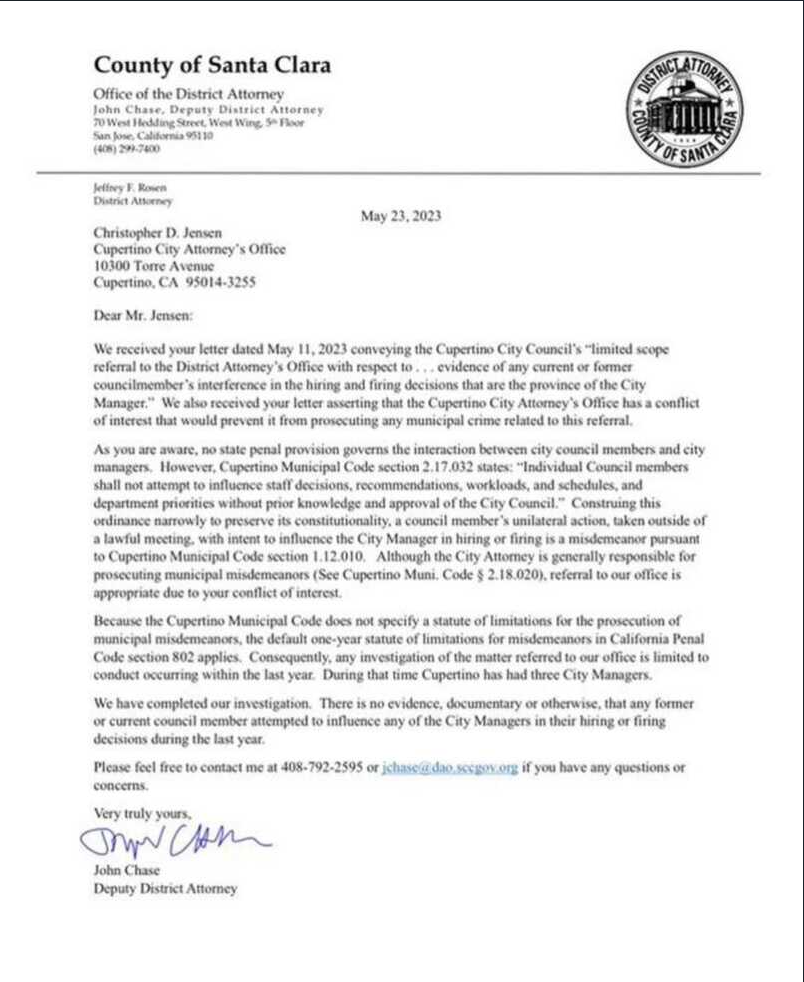
- Referred Santa Clara County District Attorney to investigate current and former councilmember (including former Mayor Paul) to see if they had unduly influenced the City Manager or City Staff in hiring or firing decisions.
- Went ease for City Staff and didn't ask for any improvement in response to the Civil Grand Jury report.
The interesting thins is the Deputy District Attorney responded to the referral in a short 9 business days and claiming "There is no evidence ... that any former or current council member attempted to influence any of the City Managers in their hiring or firing decisions".
San Jose Spotlight covered the story.
Don’t make me wrong. I like the idea of Democracy. But I don’t like our current practices of Democracy.
Our current practice is the Trustee Model of Representation. Voters vote for a candidate based on the belief that the candidate will represent them properly. Once elected, the representative works on their own for two, four or six years based on the length of the term. But voters basically lose control of their representative.
This model fails in both theory and reality.
There are only four ways of spending money.
- You spend your own money on yourself. Our everyday life works on this model. Fortunately it is also the most efficient way of spending money — you always try to spend your own money in a way that serves you the best.
- You spend your own money on someone else. Thinking of giving gifts for a coworker’s baby shower. You tend to not care about the gift, with staying under the budget being your main concern.
- You spend someone else’s money on yourself. One legal case is that if you are on a business trip your company can compensate for meals. You tend to spend as close to the limit as possible.
- You spend someone else’s money on someone else. You tend to not care about how much you spend and how the money is spent. Unfortunately, our Government falls in this model.
The case is not only limited to money, but to everything, like natural resources and even the safety of the society. Even worse, most representatives are trying to convert some resources from Model 4 to Model 3, which is they can benefit from the resources they control for all the people. That’s why most people think their representatives are out of touch and even corrupted. Representatives who wholeheartedly work for the people are rare. You should cherish them if you are lucky enough to have some.
Is there any solution? Fortunately, the answer is yes. With the help of modern technology, we can convert representatives to the Delegate Model of Representation. In this way, people as a whole controls how to spend their own money on themselves. Suddenly we return to the model 1 of spending, which is also the most efficient way.
It will also be the first time to fulfill an American dream: the Government should be of the people, for the people and by the people.
Cupertino's Possible New Taxes on 2024
City of CupertinoAccording to Bloomberg Tax, Cupertino City Council weighs four tax options to fill in Apple revenue loss. The council must decide by June to make the options appear on the November 2024 ballot.
City of Cupertino published a survey for business community at here.
The four tax options are:
- A 0.25% local transaction and use tax, which would be added to the 9.125% sales tax. It would be levied on purchases made in Cupertino and allocated to the city. The city expects this tax would raise $5.4 million annually.
- An increase from 12% to 15% in the city's transient occupancy tax on lodging, which would raise $1.9 million per year.
- A parcel tax levied at a flat rate or several progressive rates on homes and businesses, which would raise $3.7 million per year.
- A business operations tax levied at progressive rates based on some measurable aspect of the business operations, such as: gross receipts/payroll, number of employees, square footage of business, etc. BOT would raise $4.1 million per year.
Transaction and Use Tax is different from sales tax. Sales tax is based on Point of Sale, while TUT is based on Point of Delivery. Cupertino residents should pay TUT when they shop online since TUT applies to delivery address. Anyone shopping in Cupertino businesses also should pay the increased TUT.
Cupertino's current sales tax is 9.125%. With 0.25% hike, the new tax rate will be 9.375%. As comparison, Sunnyvale, Santa Clara, Saratoga, and Los Altos have sales tax rate at 9.125%. While sales tax in San Jose is 9.375%.
The city's survey suggested the Business Operation Tax being considered is employee head tax. Many businesses, including Apple, expressed they oppose such tax before. But that happened before Apple sales tax loss. Apple mentioned they would stop any future growth in Cupertino if employee head tax is levied.
The parcel tax applies to each home and business. It can be either flat rate or per square foot. Flat rate has more impact for individual home owners than large landlords since they would pay the same amount regardless the size of the property. The city's survey suggested flat rate Parcel Tax is being considered. Bloomberg has an article A Progressive Parcel Tax Could Solve Cupertino’s Budget Woes.
Transient Occupancy Tax applies to lodgers in Cupertino hotels. It doesn't affect residents directly, but may affect hotel business.
Below is a copy of this article on Bloomberg Tax by Laura Mahoney
Cupertino Weighs Four Tax Options to Fill in Apple Revenue Loss December 5, 2023, 7:47 PM PST
o City council faces June deadline to decide o Revenue loss tied to state’s review of Apple sales tax agreement By Laura Mahoney / December 5, 2023 10:47PM ET / Bloomberg Law Leaders in Apple Inc.'s hometown of Cupertino are considering a menu of four tax increases to make up for the loss of revenue from the company’s online sales. The Cupertino City Council voted 4-1 on Tuesday to direct its staff to ask businesses in the city for their input on the tax ideas and report back in January, when the council will also be considering budget cuts to help close a $15 million deficit due to the state’s actions. Next, the council could consider narrowing the options for possible placement on the November 2024 ballot after polling residents to gauge support. The council must decide by June. The four tax options are: • A 0.25% local transaction and use tax, which would be added to the 9.125% currently levied in Cupertino that includes statewide sales tax and six different county or regional special taxes. It would be levied on purchases made in Cupertino and allocated to the city, and would raise $5.4 million annually. • An increase from 12% to 15% in the city’s transient occupancy tax on lodging, which would raise $1.9 million per year. • A parcel tax levied either at a flat rate or several progressive rates on homes and businesses, which would raise $3.7 million per year. • A business operations tax, or employee tax, levied at progressive rates based on the number of employees, which would raise $4.1 million per year. Cupertino is facing the choices because the California Department of Tax and Fee Administration is scrutinizing whether Apple improperly designated the city as the location of online transactions for iPhones, MacBooks, Airpods, and other products sold in California. The city has an agreement with Apple to give 35 cents of every dollar to the company, and has paid Apple $107.7 million since 1998. The council has already set aside $56.5 million to repay the department for sales tax it has received since April 2021 and expects future sales tax revenue could drop by 73%. The city is appealing the department’s determination, but that process is expected to take months or years and could end up in state court. Council members, who did not name Apple during the hearing, opted to ask the business community for input first instead of taking recommendations from its staff and a consulting firm that analyzed options to begin polling residents on their support for the transaction and use tax. That option, which would require a majority of voters’ approval, would keep the city’s tax rate competitive with its neighbors’ and be spread across residents, businesses, and visitors. Even if the city enacts a tax increase, it will still face an annual budget shortfall of at least $10 million, said Kristina Alfaro, director of administrative services. To contact the reporter on this story: Laura Mahoney in Sacramento, Calif. at lmahoney@bloombergindustry.com Link to story: https://news.bloombergtax.com/daily-tax-report-state/cupertino-weighs-four-tax-options-to-fill-in-apple-revenue-loss
Cupertino New ADU Policies
City of CupertinoOn 11/14/2023, the Planning Commission of Cupertino made significant changes about Accessory Dwelling Unit (ADU) policies. The changes include:
- Allow up to three ADUs on a single family lot (page 19 of the redline) ** Old rule: only one ADU in general, two ADUs with conditions
- Increase the height limitation of ADUs (page 20 of the redline) ** Detached, new rule: 18 feet, old rule: 16 feet ** Attached, new rule: 25 feet, old rule: N/A
- Two-story ADU allowed (page 20 of the redline) ** Old rule: Only conversion of existing two story part of primary dwelling unit allowed
- Two-story permit is eliminated for primary dwelling unit (page 13 of the redline)
No new parking requirement was added for ADUs.
The maximum three ADUs per lot could be in any combination of the following, taking into consideration other existing zoning standards:
- One attached ADU
- One conversion of existing space ADU (whether in principal dwelling unit or existing accessory structure)
- One detached ADU, or
- One Junior ADU
The redline of the changes can be found here. Note: the document was downloaded from City Council item on 12/06/2023. It was uploaded to Google Drive so you don't have to download a pdf file for every click.
The minutes of the meeting can be found here.
Cupertino's Potential Service-Level Reductions for FY 2024-25
City of CupertinoDue to a state audit, Cupertino lost about $30M online sales tax per year.
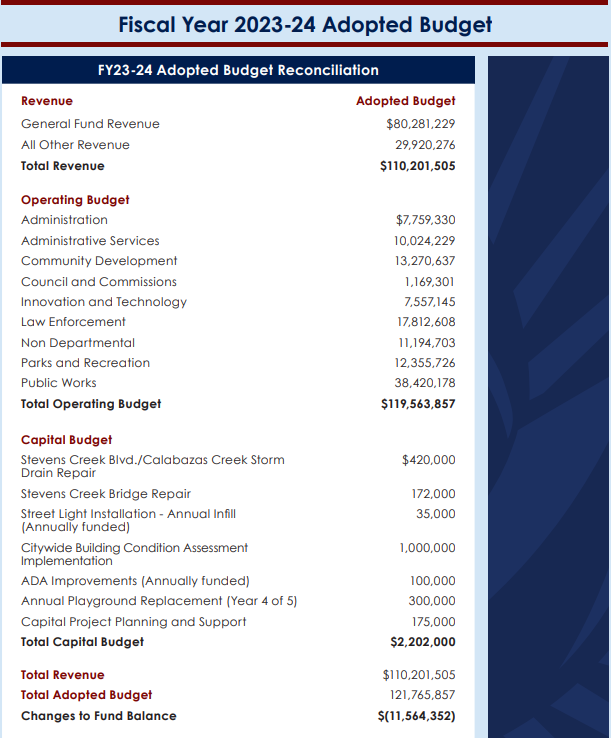
For FY 2023-24, Cupertino reduced the spending to $120M (the spending was $130M for FY 2022-23), a $10M reduction compared to previous fiscal year. The $10M reduction was mainly Service-Level Reductions.
Below is a screenshot for FY 2023-24 budget.
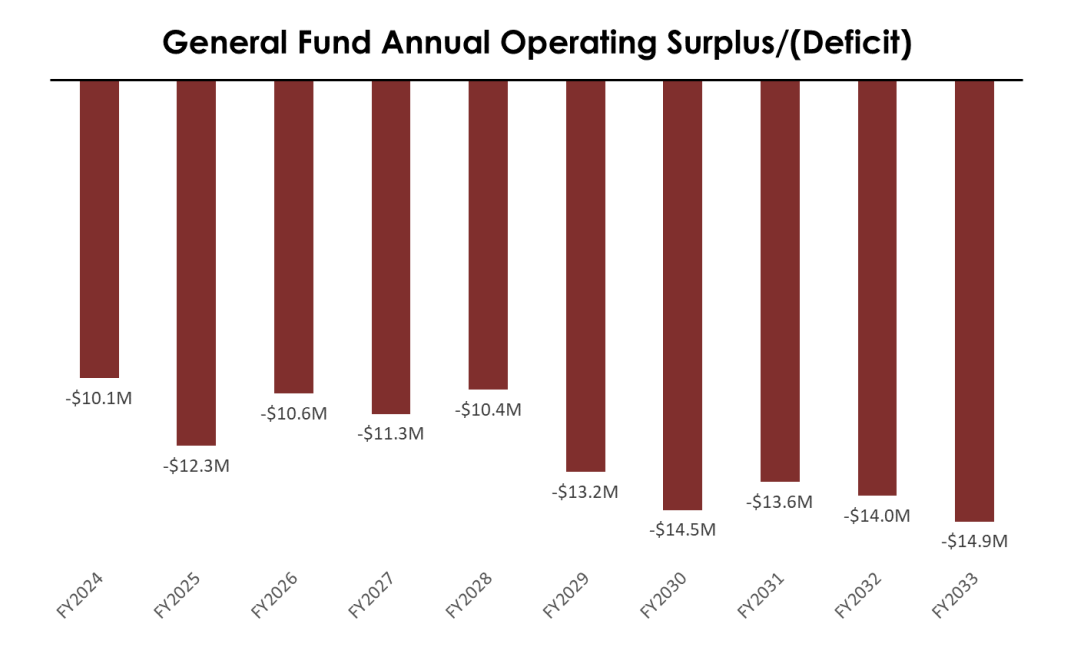
According to staff report on 01/17/2024 (snapshot on 1/23/2024, the original link is here which will download a file to your computer), even with budget cutting made in FY 2023-24, Cupertino is still facing $10M budget deficit. And the gap will grow up to $15M in ten years.
To reduce the budget deficit, the City Council is seeking to
- Increase revenue with new taxes and increasing fees for city services
- Reduce spending with potential service-level reductions (snapshot on 1/21/2024. The original link is here which will download a file to your computer).
At the same time, Cupertino Voice performed some budget related surveys. One promising suggestion for reducing the budget, endorsed by a majority of respondents to Survey #2, was to “Scaling back the Staff Per 1,000 Residents to FY 2014-15 level". This measure alone could save the city about $9M per year. The results of Survey #2 were shared with the City Council with both oral and written communications.
City staff proposed a list of 32 potential service-level reductions (SLR). Most of them will affect residents everyday life.
Cupertino Facts also had a nice article covers this topic.
Below are sceenshots for those SLRs
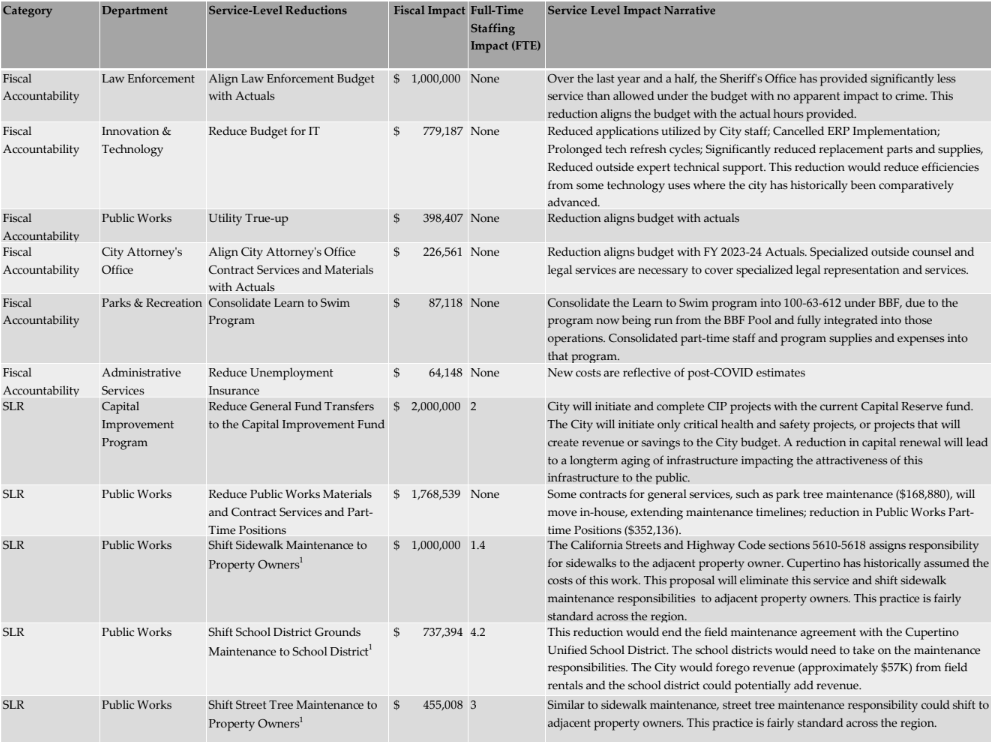
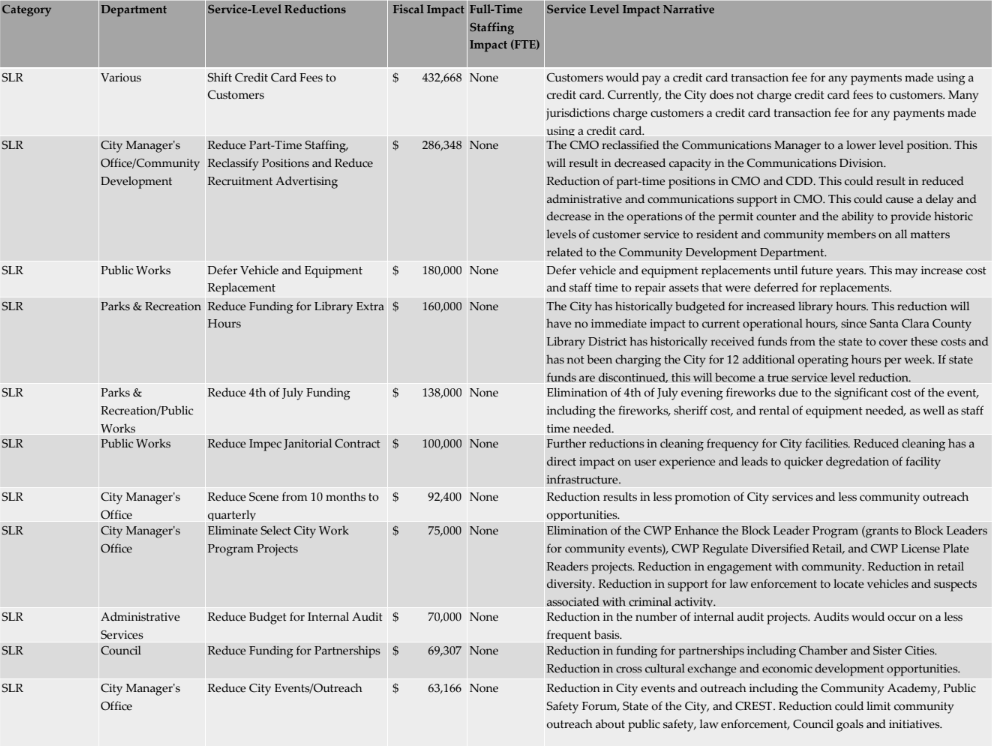
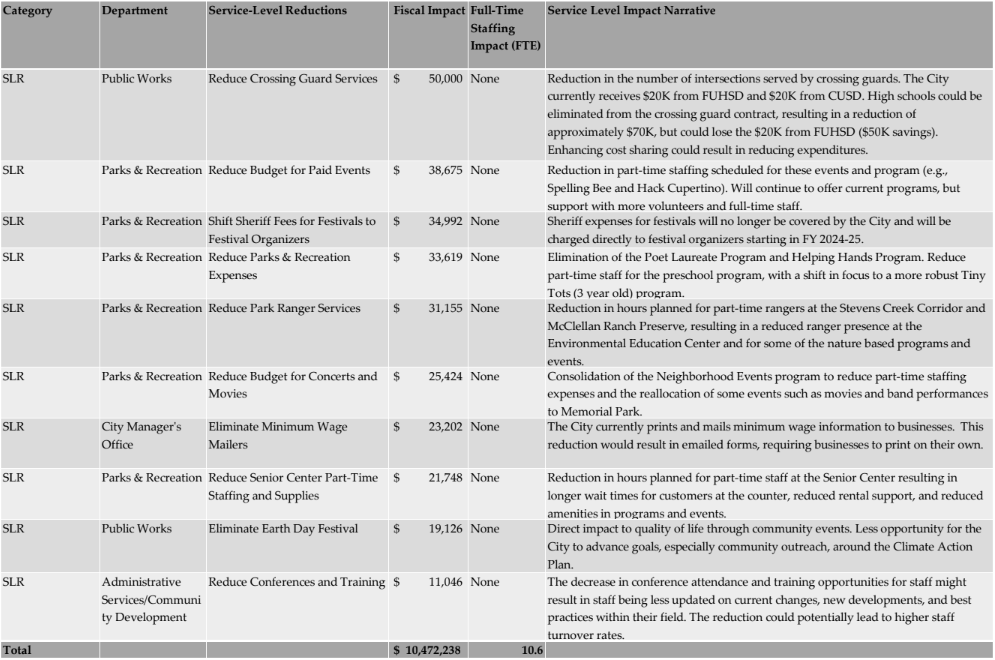
Cupertino Budget Deficit and Measures to Balance It
City of CupertinoDue to a state audit, Cupertino will lose $30M online sales tax per year.
For FY 2023-24, Cupertino reduced the budget to $110M (the budget was $130M for FY 2022-23), a $20M reduction compared to previous fiscal year. The $20M reduction was mainly Service-Level Reductions.
But there are still more than $10M deficit. The city expects the deficit to increase to $15M in next ten years.
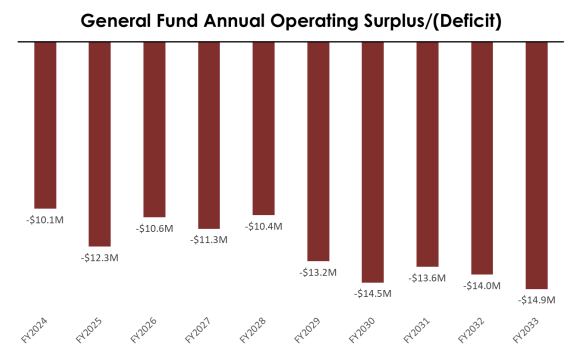
In 2024, the city is seeking more measures to close the $10M deficit. The efforts include:
At the same time, Cupertino Voice performed some budget related surveys. One promising measure with voter approval is to “Scaling back the Staff Per 1,000 Residents to FY 2014-15 level". This measure alone could save the city about $9M per year. But the City Council haven't considered this measure.
Cupertino Housing Element 2024
City of CupertinoCalifornia cities are expected to update their Housing Element every eight years. The Housing Element serves as the local government's blueprint for how the city will grow and develop.
The Housing Element must be approved by HCD (California Department of Housing and Community Development). HCD adopted RHNA (Regional Housing Needs Allocation) in 2021. HCD uses the RHNA methodology to specify housing allocation goals. The allocation numbers that Cupertino and other cities must now meet are generally much higher than previous cycles. An audit by the California State Auditor has outlined several weaknesses in the RHNA methodology. Here is a good article regarding the controversy regarding this issue.
California also passed many laws recently to encourage housing. Those new laws and HCD's high RHNA allocations changed cities' Housing Element dramatically. Cupertino has no exception. Cupertino's RHNA allocation is 4,588 new units from 2023 to 2031.
Cupertino has its third draft of Housing Element. To achieve the RHNA allocation, Cupertino rezoned many sites and setup many ways to increase density.
One interesting part of the Housing Element is HE-1.3.6 (page H-17 of the Housing Element third draft). The first bullet says "Allowing corner lots in R1 zoning districts to develop as multi-family rental housing using R3 zoning regulations to encourage missing-middle developments." R1 means single family house. R2 means duplex. R3 is not triplex, but multi-family housing. All apartments in Cupertino so far are R3. This means all the corner lots can become apartments without additional parking requirements.
The second bullet says "Allowing lots zoned for single-family residential uses that abut (either shares a property line or is directly across the street from) property that fronts an arterial or major collector, and is zoned and used for commercial or mixed-use development, to develop with rental multi-family housing using R3 zoning regulations to encourage missing middle housing. "
This means properties located behind or around a shopping center can become apartments. Probably many people live there didn't realize they are impacted.
Arterials:
- Homestead Rd
- Stevens Creek Blvd
- De Anza Blvd
- Wolfe Rd
Major collectors:
- N. Tantau
- Miller Ave
- N. Stelling
- Bubb Rd
- N. Foothill Expressway
Below is an incomplete list of impacted streets:
- Near Homestead ** Shady Oak Ln ** Firethorn Dr
- Near Stevens Creek Blvd ** Norwich Ave - all of east side ** Amherst Dr-east end ** Denison Ave-south end ** Wheaton Dr-all of south side ** Stern Ave-north end ** Bret Ave-north end ** Judy Ave-north end ** S Tantau Ave-north end ** E. Estates Dr-north end ** Richwood Dr-north end ** Bixby Dr-all of north side ** Brenda Ct-north and east end ** Mello Place-north end ** Deeprose Pl-north end (possibly) ** Randy Lane-south end close to Stevens Creek Blvd ** Miner Place-north end, south end ** Partlett Place-north end, south end and by Donut Wheel ** Scofield Dr – all of it ** Alves Dr-between Sachi Way and Stelling ** Peninsula Ave-south end ** Santa Clara Ave-south end ** Adrian Ave-south end ** Eaton Place-east end ** Ramona Ct-north end ** Northeast side of Stevens Creek Blvd near N. Foothill Expressway ** Cupertino Rd-west end
- De Anza Blvd ** Sunrise Dr-east end (possibly) ** Rodrigues Ave-behind XLB Kitchen shopping center ** Terry Way-east side ** Paradise Dr-east side ** McClellan Rd-northeast and southeast end ** Felton Way-east side ** Blossom Ln-east end ** Kirwin Ln-east end ** Westlynn Way- east side (possibly) ** Jamestown Dr-east side ** Clifden Way – west end ** Clay St – west end ** Silverado Ave – west end
- Bollinger ** Clifden Way-west side ** La Roda Dr-south end ** S Blaney Ave-southwest end
Bollinger Road Project
City of CupertinoBollinger Road is the boundary between Cupertino and San Jose.
In July 2021 (during Covid-19 pandemic), the City of Cupertino generated Bollinger Road Corridor Safety Study. The report provided many safety suggestions and two alternatives.
- Alternative A includes a lane reduction on Bollinger Road, from two travel lanes in each direction to one travel lane in each direction and a two-way left-turn lane.
- Alternative B maintains the existing lane configuration of two travel lanes in each direction.
You can also see related information here.
San Jose Spotlight reported on 01/22/2024 that the project is set to start this (2024) summer.
Cupertino received external funding for this project. Cupertino needs to pay 20% of the cost for design.
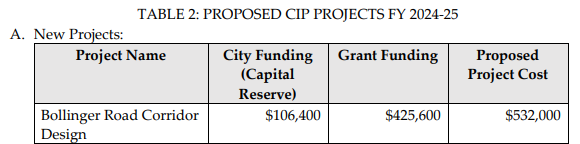
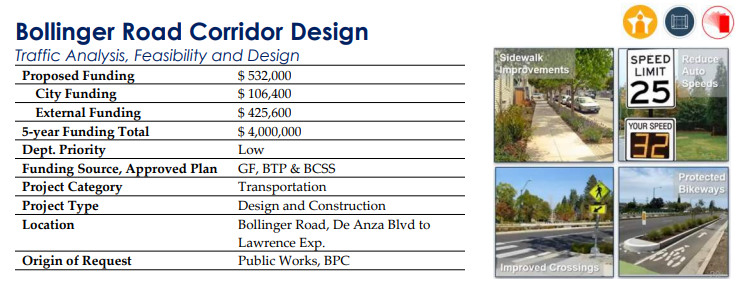
This project appeared as Low priority item on 03/19/2024 City Council study session.

According to Bollinger Road Corridor Safety Study, the total cost for Alternative A is $11.7M, and the total cost for Alternative B is $10.5M in 2021. The project will be a five-year project. And total cost for Cupertino is estimated to be $4M.
During the public comment time, residents were split into two groups with one group supported Alternative A (lane reduction), while another group supported Alternative B (maintain lanes). Which alternative do you support?
Below are more details about Bollinger Road Corridor Safety Study.
The study is a safety study with goals to "identify improvements to create a safer and more accessible corridor". According to the report, seems all the collisions happened at intersections.
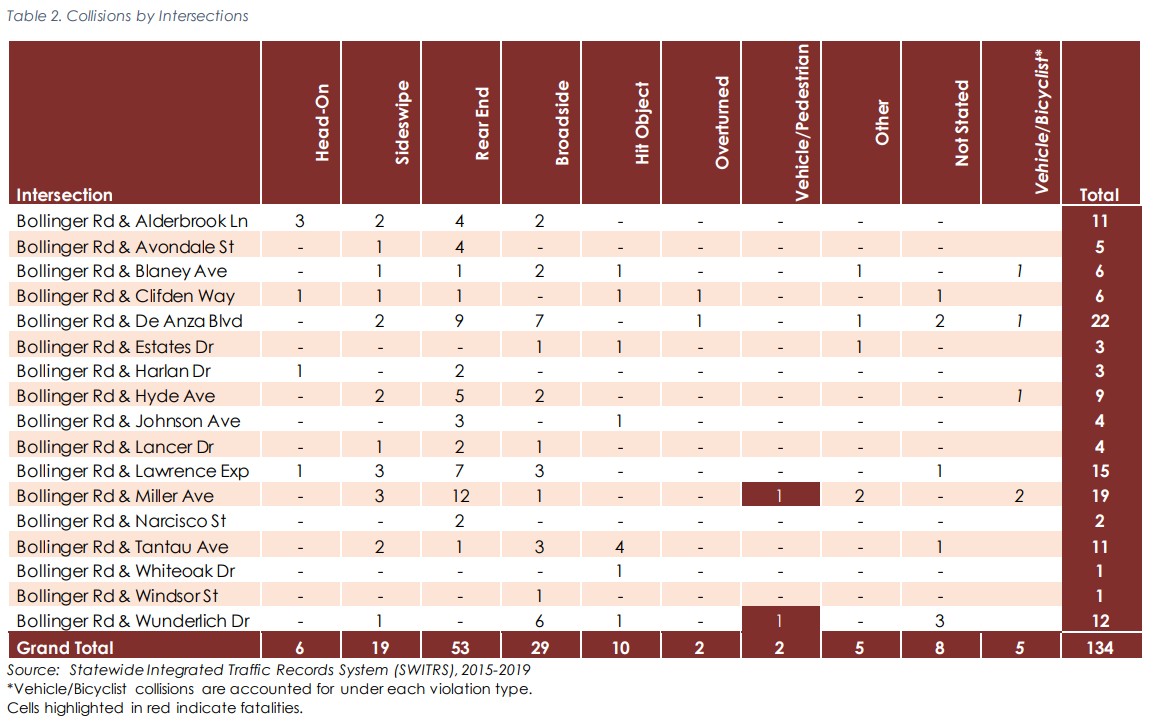
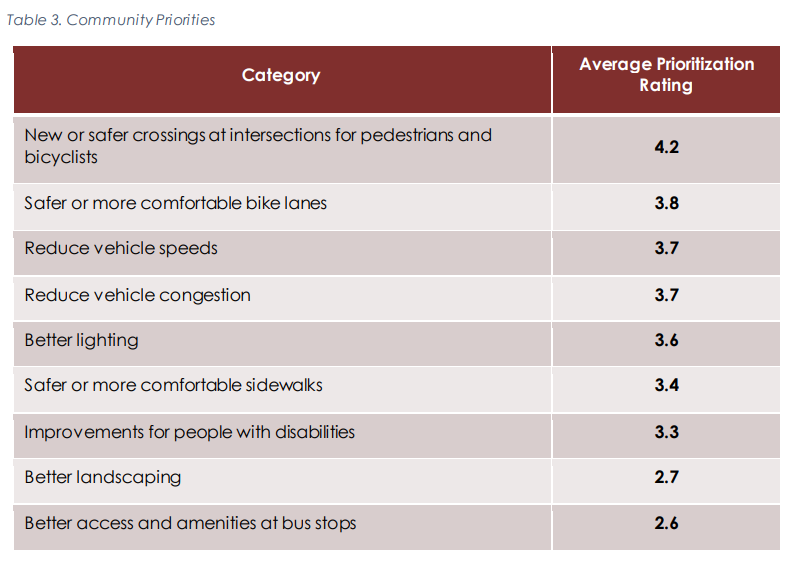
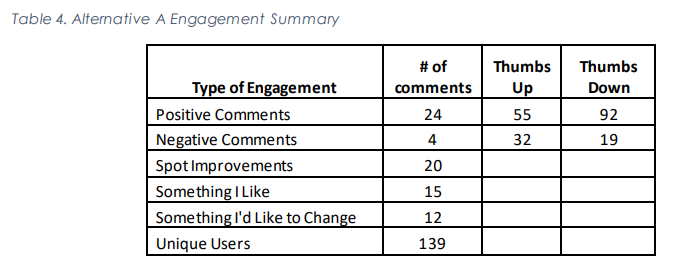
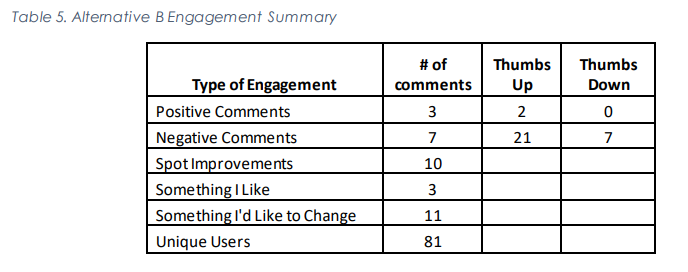
The study performed two surveys in March 2021 and May 2021, respectively. The March survey received 247 responses. While the survey in May had 139 unique users "VIEW" the maps. The report didn't mention how many responses received for the survey in May. The survey in May was about the two alternatives of reducing lanes and maintaining current lanes. Some residents reported they were aware of the survey in March, but they were not aware of the survey in May.
The results for the survey in March 2021 were:
The results for the survey in May 2021 were:
Cupertino City Capital Improvement Programs 2024-25
City of CupertinoCupertino City staff proposed new Capital Improvement Programs for FY 2024-25 at 3/19/2024 Council Meeting. Six (6) new projects were proposed with total cost about $19.5M.
At the same time, there are seventeen (17) existing projects with remaining funds more than $25.8M, 6 nearly completed projects, and 5 completed projects. See here for a complete list.
Because Cupertino is in a budget crisis right now, the city's capital reserve is expected to drain out in two years.
Weeks later, city staff proposed City Work Program (CWP) for FY 2024-25 at 4/3/2024 Council Meeting.
Comparing with proposed CWP staff proposed one year ago (4/4/2023), the new proposed CWP staff proposed on 4/3/2024 has a noticeable change: the new CWP didn't include any budget information. Some of the CWPs appeared in the 2023 CWP list which contains budget information. But there are some new CWPs (like "Speed Limit Lowing") totally missing budget information.
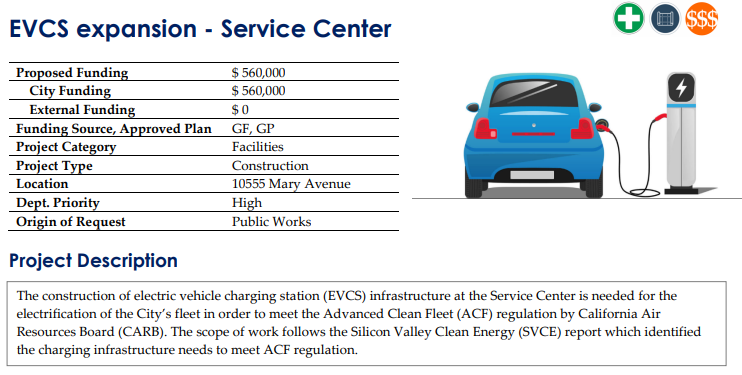
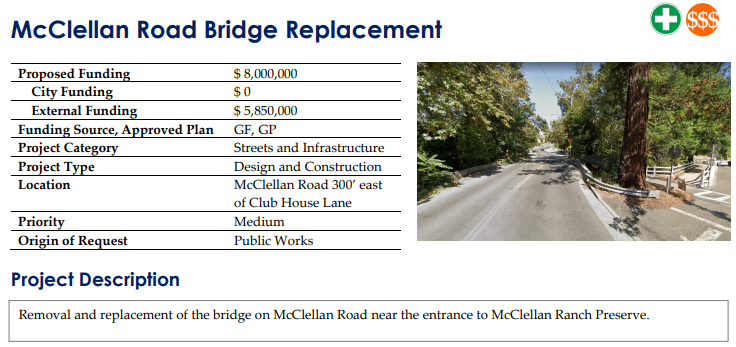
The list of new CIPs can be found here. Below are the screenshots for each of them.

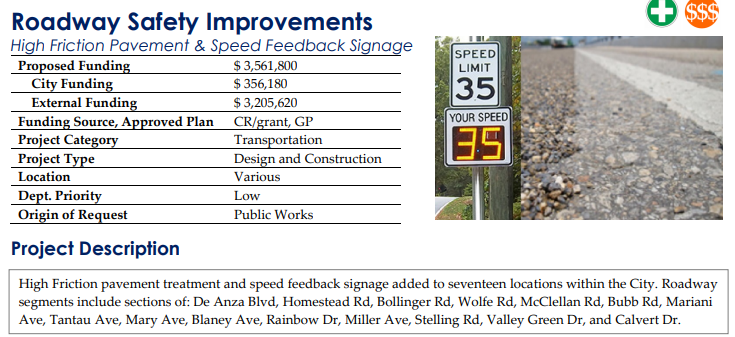
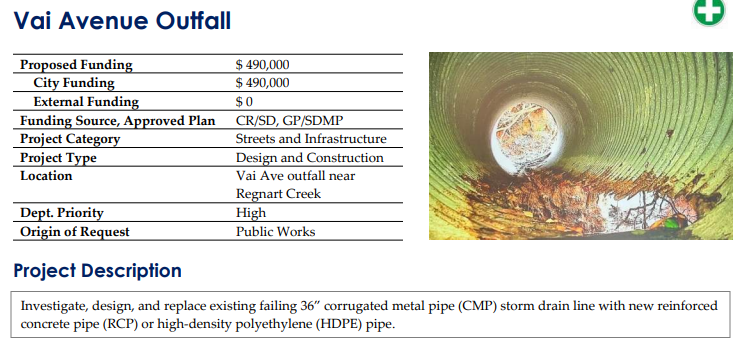
Which CIP do you support?
CUSD Financials in 2024
Cupertino Union School DistrictCUSD is about to transition from LCFF (Local Control Funding Formula) to Basic Aid in 2024-25.
California K-12 public schools have two funding models: LCFF and Basic Aid, with California setting an entitlement per ADA (Average Daily Attendance). If the school district revenue from property taxes and other sources is less than the entitlement, the district will be funded by LCFF via state funds. Otherwise, the school district will be funded by Basic Aid via property taxes.
If school district is funded by LCFF, the total revenue will be related to enrollment. The more enrollment (ADA) there is, the more revenue the district receives. If the school district is funded by Basic Aid, its total revenue will be based on the total amount of local property tax, and not related to enrollment anymore.
From Santa Clara County Tax Allocation, CUSD should receive 24.75% of the property tax (FUHSD receives 16.71% of the property tax). The total property tax rate is about 1% of accessed value.
CUSD also has two active bonds which are at 0.0357% in total. For $100K accessed value, CUSD should receive $247.50 from the 1% property tax plus $35.70 from active bonds. As a comparison, FUHSD receives $167.10 from the 1% property tax plus $44.10 from bonds.
From CUSD 2023-24 budget, the revenue for CUSD is $207M in FY 2023-24, a 12% (or $28M) decrease compared to that in FY 2022-23 due to reduction in Federal, State (other than LCFF) and local revenues. But the total expenditures are $223M. So CUSD has a $16M deficit in FY 2023-24.
Within the $223M expenditures, about $185M are for employee (teachers and administration positions) salaries and benefits.
Compared to FY 2022-23, the enrollment in FY 2023-24 decreased 1.5% (from about 13,700 to about 13,500).
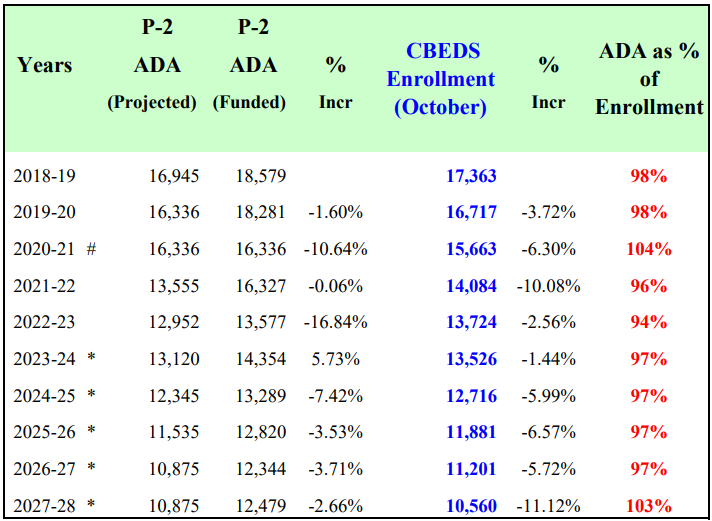
But the total budgeted FTE (Full Time Employee) in FY 2023-24 is 1502.540, an increase of 53.491 (3.7%) compared to FY 2022-23 (1438.174).
Budget for FY 2024-25
CUSD passed a stunning budget for FY 2024-25 with more than $33M deficit. The expense is more than 10% compared to previous year. Below is a summary of the budget.
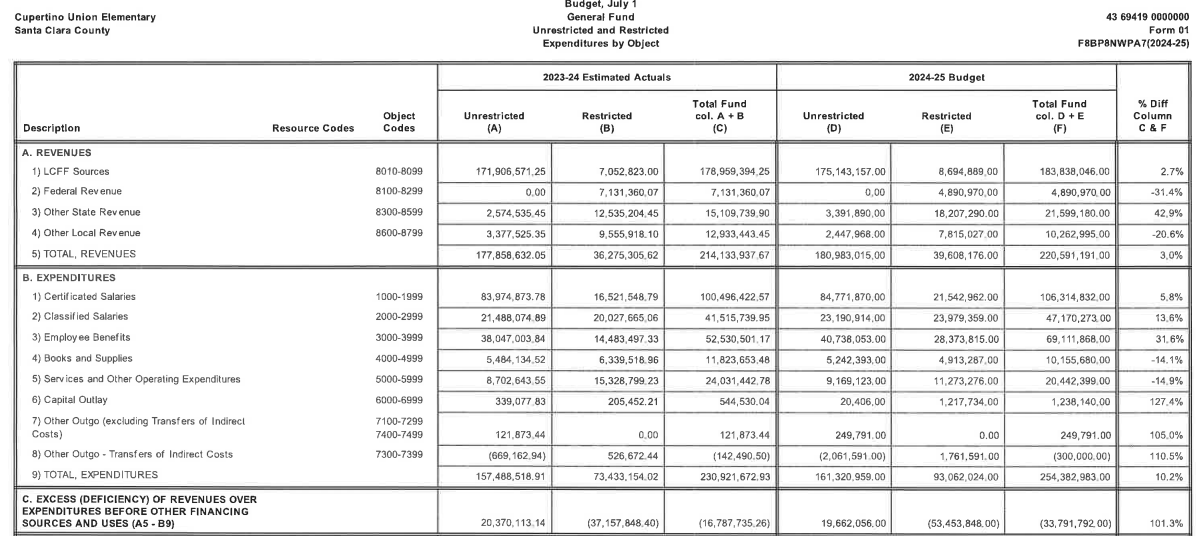
CUSD Bond Measure 2024
Cupertino Union School DistrictCUSD Board discussed a potential bond measure at the 4/25/2024 Board meeting. The list of projects can be found here.
Why bonds?
As you can see in CUSD FY2023-24 Budget, CUSD budget were spent on
- Employee Salaries and Benefits (83%)
- Books and Supplies (7%)
- Services and Operating Expenditures (9%)
- Misc expenses
Only part of "Services and Operating Expenditures" can be used for facility repairs and improvements. But that's not enough. CUSD depends on bonds for facility repairs and improvements as a "tradition".
What are current bonds?
You can find all CUSD bonds on EMMA.
Residents are currently paying two CUSD bonds right now (you can check at Santa Clara County Tax Allocation).
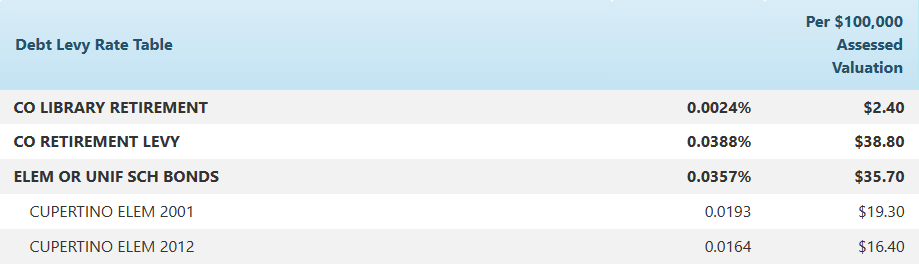
The 2001 bond should be paid off in 2027. The 2012 bond (Measure H) ran out of money in FY2022-23, but will be paid off around 2040.
What's the difference between bonds and parcel taxes?
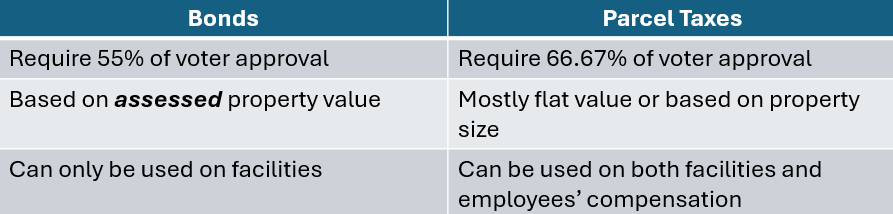
Please see this article for more information.
How bonds work?
According to Bond measure at the 4/25/2024 Board meeting,
- The district raises the money (bond) in three series
- The residents pay back the bond based on assessed property value in about 30 years (probably faster since the assessed property value should increase)
- The district uses the bond money on projects (normally last shorter than payback time, previous 2001 and 2012 bonds lasted around 10 years each)
The Official Bond Measure:
On 06/13/2024, the board voted to put modified tax rate extension on November ballot. The total bond amount is $347M. The tax rate looks like below with longer term and lower average tax rate.
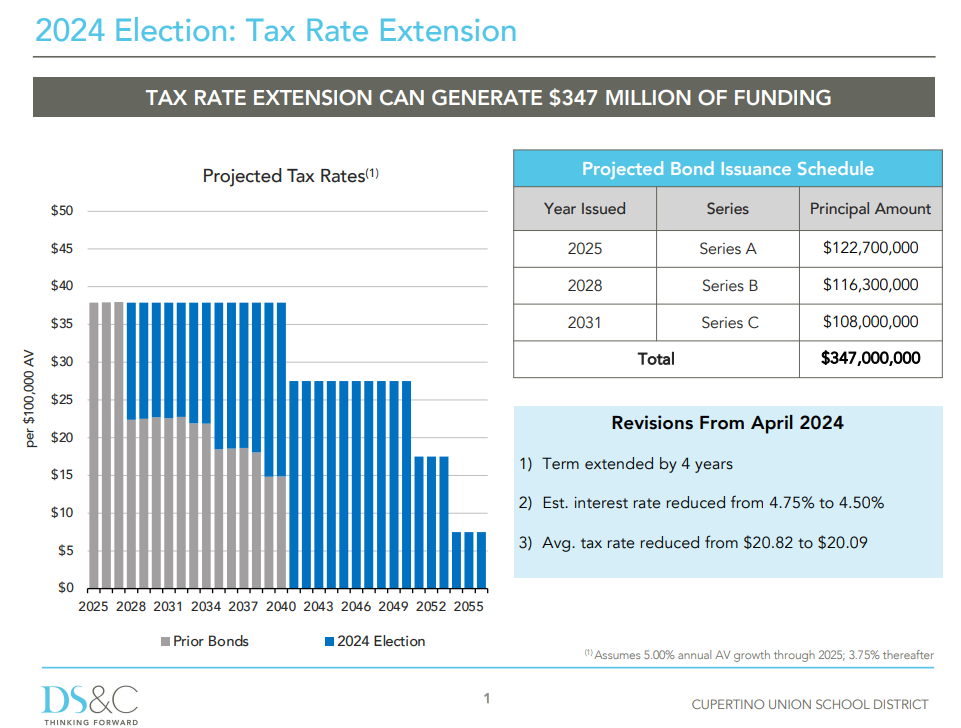
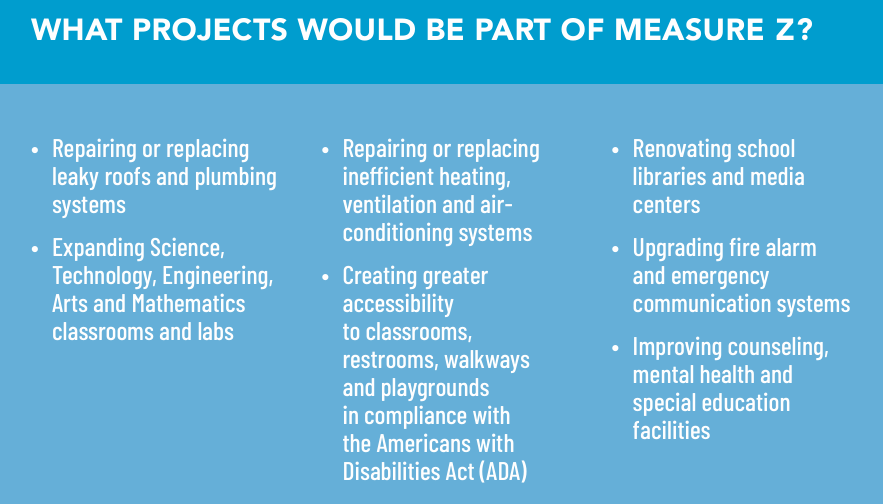
The project list for the bond is mostly generic with emphasis on new classrooms, labs for Science, Technology, Engineering, Art, and Math (STEAM). The keywords for the usage are "repair", "modernize", "renovate", "upgrade", "expand", "construct", etc. Below are the full list.
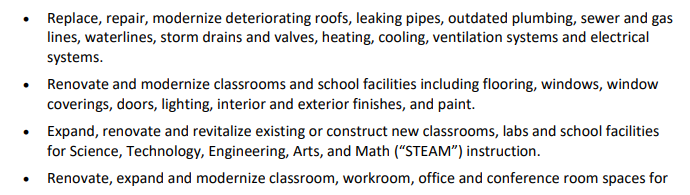
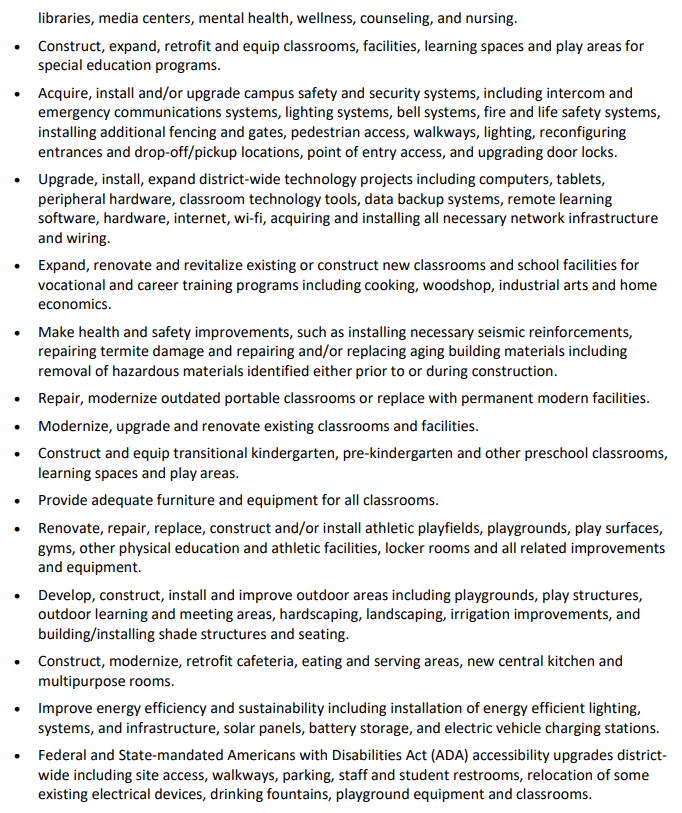
If passed, the bond will have an oversight committee and report the usage every year.
Scenarios for new bonds (obsolete)
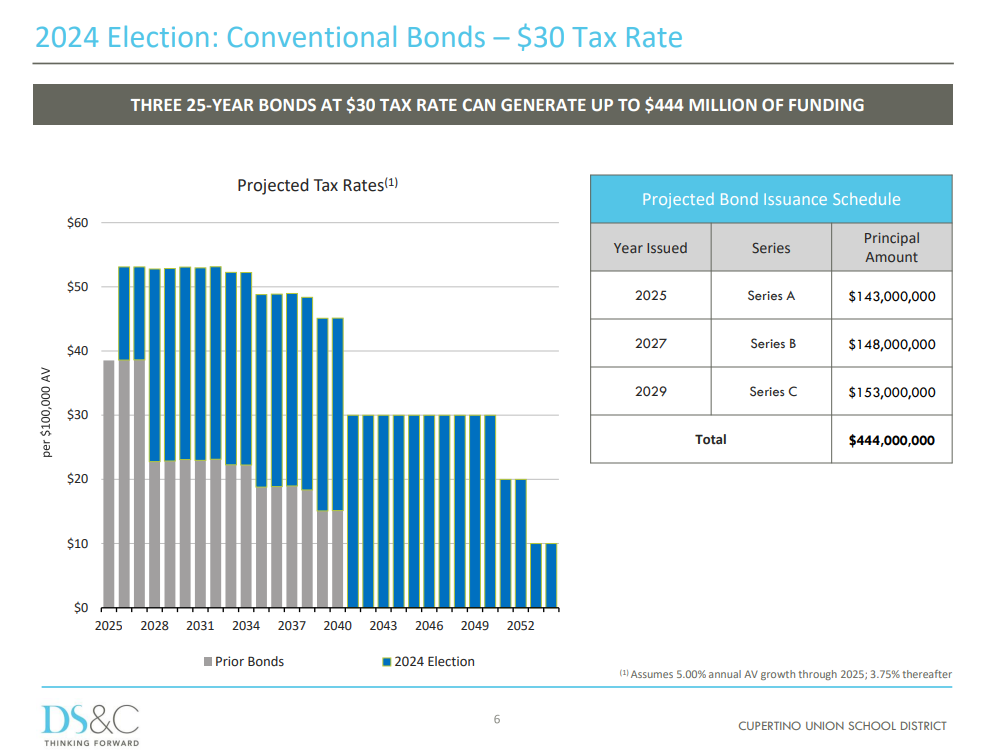
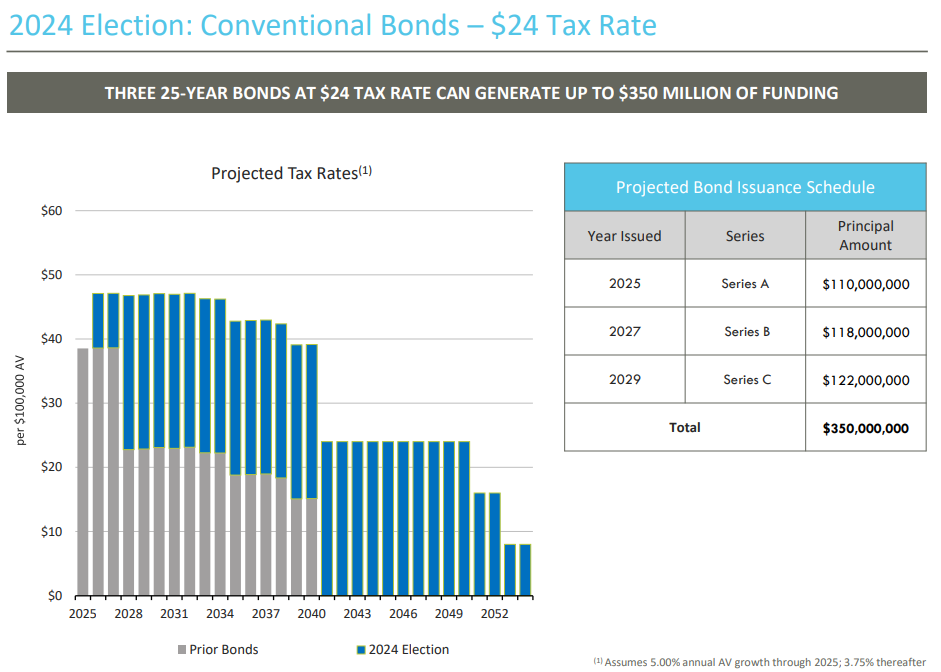
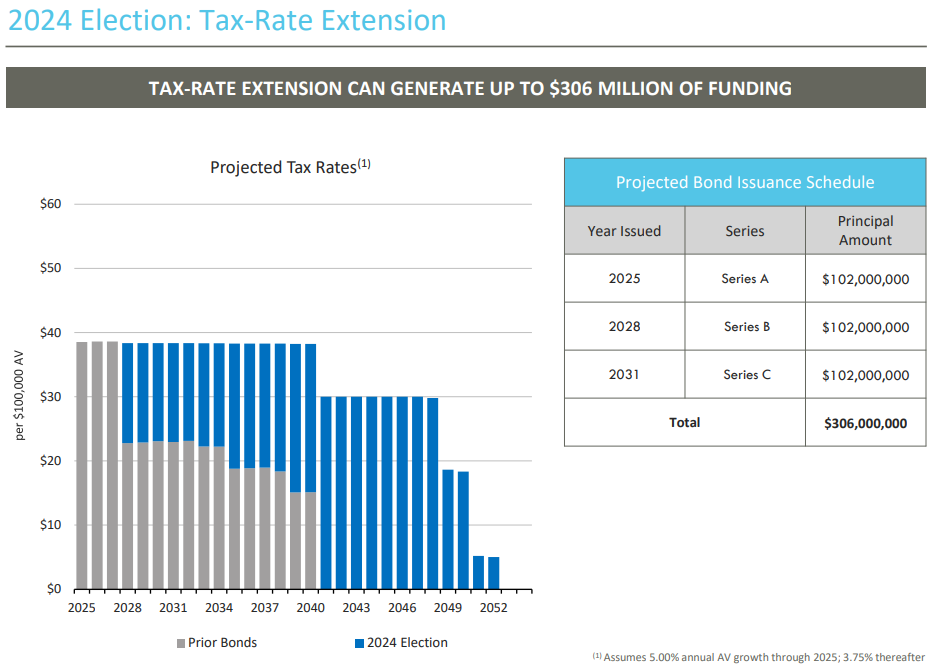
The district proposed three scenarios. Below are the screenshots where you can see residents' burden and the bond amount.
Please notice the tax rate is per $100,000 assessed value (not market value). If you property is assessed to be $2M, your burden for this bond will be 20 times the proposed tax rate per year.
Tax rate: $30 per $100,000 assessed value, total bond value: $444M.
Tax rate: $24 per $100,000 assessed value, total bond value: $350M.
Tax rate extension. Total bond value: $306M.
CUSD New District Office
Cupertino Union School DistrictAt the Board meeting on 4/25/2024, the Board discussed the plan to relocate the District Administrative Office from its current location at S. Mary Avenue, Sunnyvale to the Meyerholz campus. which was closed by the district in 2021.
The district plans to use Certificates of Participation (COP) debt to finance the new office building. Unlike bonds, which need to be approved by voters, COP comes from the district's operating budget and doesn't need voter approval. The district is currently in a budget deficit.
Since CUSD is renting its current Administrative Office, after moving into the new office, the district needs to pay the COP, but not the current rent. The current rent is about $471K per year. The COP payment would be about $686K per year, an increase of about $215K per year. I assume the district would pay both current rent and the COP while the new office building is in construction. But the district needs to pay neither after COP is paid off (30 years later).
This district is planning to convert Meyerholz Elementary School to new district office, but is this the best location? I assume once Meyerholz is converted to district office, it wouldn't be suitable to be a school anymore. Should we keep Meyerholz as a potential school site and build the new district office somewhere else?
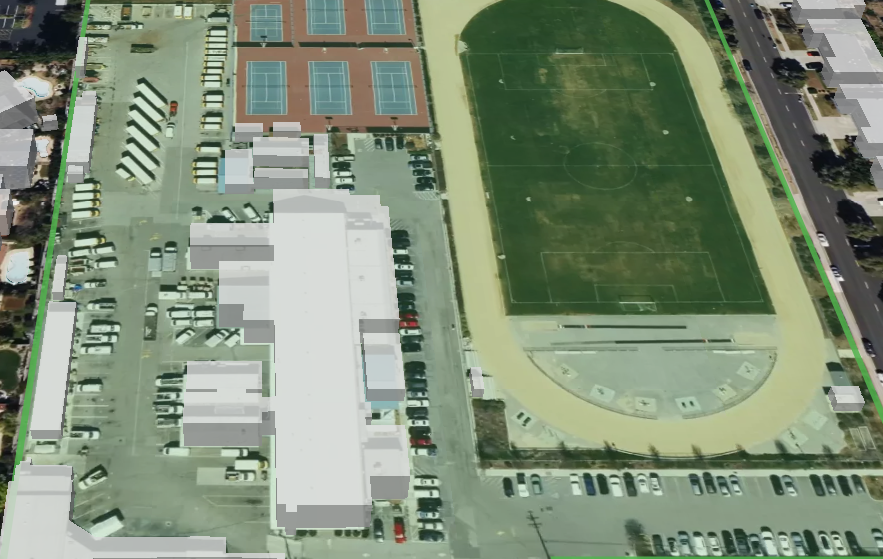
Southwest corner of Lawson Middle School could be a good alternative place. The corner is currently occupied by a lot of school buses and other district facilities. It looks like below.
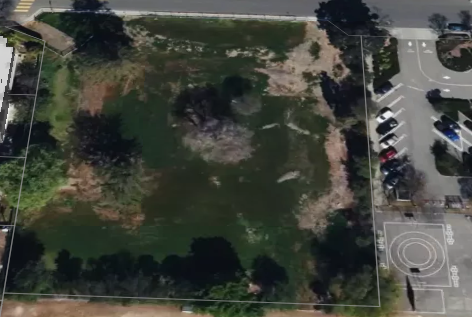
The Finch site is a 1.5 acres empty lot next to Sedgwich Elementary School. It should be a suitable alternative site if it's large enough.
CUSD School Closures in 2021
Cupertino Union School DistrictDuring the board meeting on 10/14/2021, CUSD Board voted (with 3:2 simple majority) to close Meryerholz and Regnart Elementary Schools. This decision had profound consequences to the community.
But this is not the end of it. According to the Board Meeting on 9/23/2021, the district might evaluate another possible school closure in FY2025-26.

It's important to revisit what happened in 2021 to understand the process and the reason leading to the schools' closure, as well as what can be improved.
The Timeline
CUSD failed to pass parcel tax Measure O in March 2020.
CUSD created a Citizen Advisory Committee (CAC) in the Spring of 2020 to consider options for school closures and consolidations.
The CAC presented the final report on 10/22/2020 after five meetings.
In November 2020, right after the election, the community was informed about possible school closures.
CUSD failed to pass another parcel tax Measure A in May 2021. According to [the report] (https://go.boarddocs.com/ca/cusdk8/Board.nsf/files/C78SEY0492B6/$file/Cupertino%20Union%20School%20District%20-%20Final%20Report.pdf), "The Parcel Tax revenue would allow the district to delay the decision of closing schools."
The district resumed school closure process after the failure of Measure A.
The board voted 3:2 to close Meyerholz and Regnart at the Board Meeting at 10/14/2021.
The Reason
The district mentioned two reasons for school closures:
- Declining enrollment
- State funding affecting the district budget
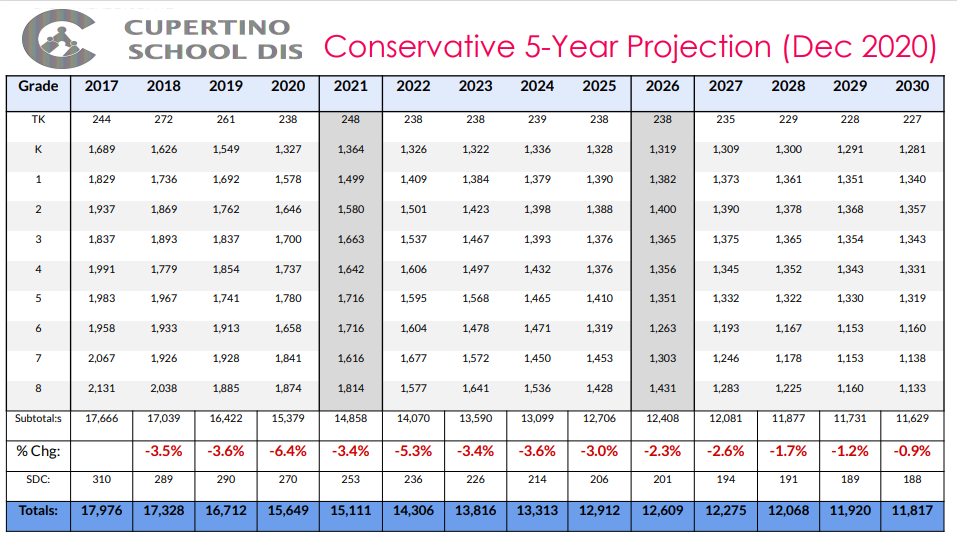
The district expected the enrollment to continue to drop.
The district expected the budget to be in a deficit for many years.
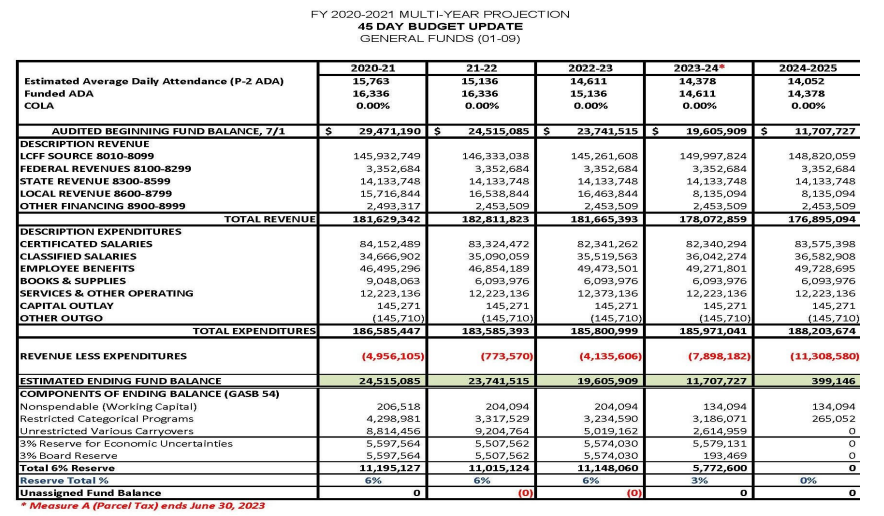
Several years have passed, and I collected the actual data and compared with the prediction below. The enrollment prediction was relatively accurate, but the financial predictions were way off.

Notably, the budget in FY 2023-24 is in a deficit again even though the actual revenue is $42M more than the predicted revenue and $34M more than the predicted expense.
One of the reasons for school closures was to reduce the expense, but the expense was not affected by the school closures at all.
Enrollment Rules The district proposed two enrollment rules during the school closures in 2021.
- Each elementary school should be staffed with at least two Kindergarten classes.
- Each middle school should be more than 700 students. (see above)

According to publicschoolreview.com, average school size in California is 588 students.
What Can Be Better?
Since the CUSD school closures in 2021, possible future school closures have become nightmares among local residents, such as the dispute related to the FUHSD Trustee Area transition.
To restore residents' confidence to the district, I think there are at least two things the district can improve on
- Critical district issues (like school closures, reconfiguration, selling school sites, etc,) should require super-majority (or 4 out of 5) votes from the board.
- If schools are going to be closed due to low enrollment, they need to have opportunity of open enrollment programs across the district.
Note
Someone asked for the voting record for the school closures. You can find the information from the record for the 10/14/2021 board meeting at Agenda - Cupertino Union School District BoardDocs® Plus. They don't have a direct link and you have to manually find the meeting on that day. It was agenda item 13.1. Below is a screenshot.
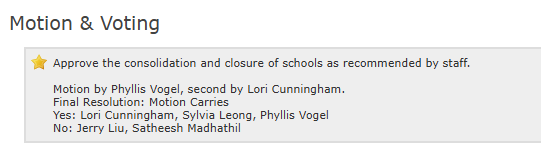
Please notice Sylvia Leong and Phyllis Vogel's current term end at the end of 2024. Sylvia is seeking for re-election while Phyllis hasn't pulled any paper yet (up to 7/25/2024).
How to Handle Controversial Issues in CUSD
Cupertino Union School DistrictSince the beginning of the 2024-25 school year, the Cupertino Union School District (CUSD) has faced several controversial issues, attracting significant media attention. You can find some media reports here and here.
Long Jiao mentioned adoption of BP 6144 at the Board Meeting on September 26, 2024, a request also made by a group of CUSD parents at CurriculumIntegrity.org. Board members Jerry Liu, Phyllis Vogal, Sylvia Leong, and Satheeth Madhathil requested to add BP 6144 to future agenda items during the September 24, 2024, board meeting.
BP 6144 appeared in the Board Advance on October 17, 2024, and will be revisited in the future.
BP 6144 is a board policy regarding instructions related to controversial issues.
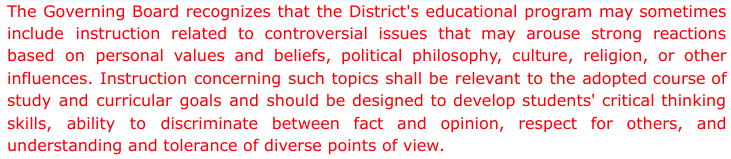
Some of the guidelines for instructions related to controversial issues are:
- The topic shall be age-appropriate.
- Instruction shall be presented in a balanced manner without bias and without promoting any particular point of view.
- In the classroom, teachers act on behalf of the District and are expected to follow the adopted curriculum, meaning they have limited freedom of speech in the classroom.
- Students have the freedom of speech without jeopardizing their grades or being subject to discrimination, retaliation, or discipline.
Below are the full list of guidelines.
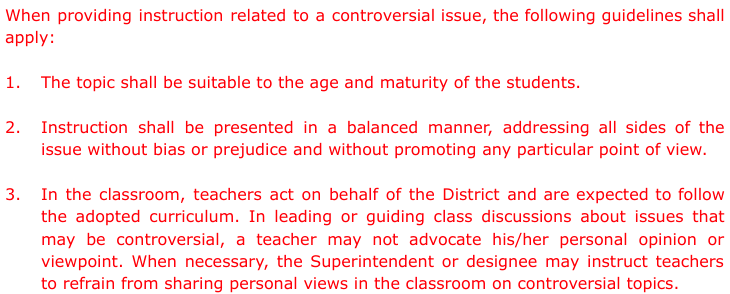
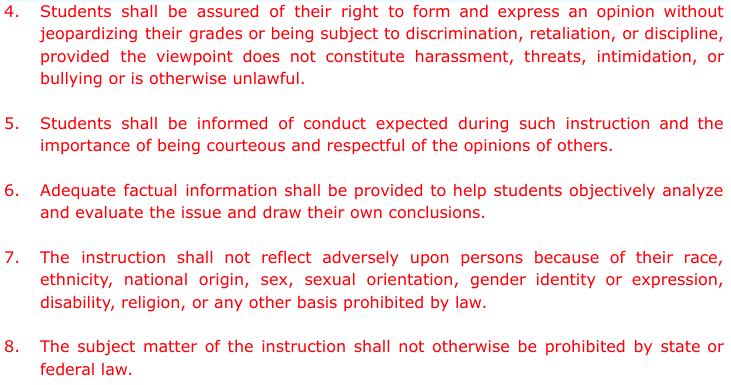
A group of CUSD parents supported BP 6144. And some members of the Cupertino Educators Association (CEA), or the Teachers' Union, opposed it.
BP 6144 has been adopted by numerous California school districts, including the Fremont Union High School District, which encompasses the entire CUSD area.
CUSD adopted BP 6144 at the board meeting on 11/21. See here and here for details.
Measure Z Projects
Cupertino Union School DistrictCUSD Measure Z Approved with $347M Bond
Measure Z, a bond measure for Cupertino Union School District (CUSD), has been approved with a 61.07% approval rate. This bond, amounting to $347 million, will be funded through a property tax rate of approximately $21 per $100,000 of assessed valuation, generating $23,300,000 annually. Importantly, Measure Z extends the current tax rate without any increase.
Next Steps: Allocating the Funds
With the bond approved, it's now crucial to determine how to allocate the funds to maximize benefits for the community and the school district. A Citizens' Bond Oversight Committee will be formed, appointed by the school board, to ensure transparency and effective use of the bond money. For more information about Measure Z, please see here.
Partial Project List
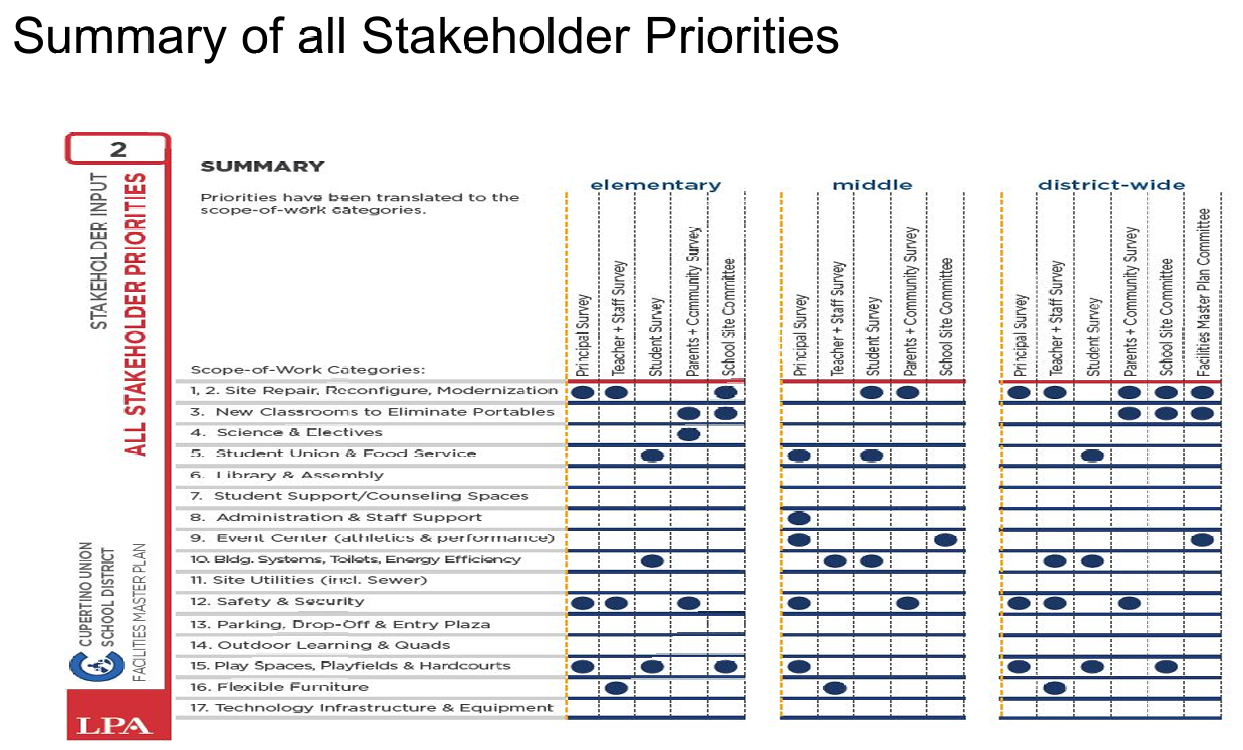
The district hired a third party conducted a survey about priorities of the projects.
Hiring Contractors for Measure Z Projects
There is a discussion on the best approach to hiring contractors. One perspective advocates for exclusively hiring unionized contractors to ensure better quality work and suggests using a Project Labor Agreement (PLA). According to sources, PLAs can have various impacts:
- Impact on Cost: PLAs may increase the overall cost of the projects
- Impact on Competition: PLAs could discourage or prevent non-unionized contractors from competing for construction projects.
- Impact on Minority Contractors: PLAs might disproportionately impact small businesses, particularly those owned by women and minorities.
- Local Impact: PLAs can be used by public project owners like school boards or city councils to set goals for creating local jobs and achieving social welfare goals.
This issue was visited at the Board Winter Advance on January 23, 2025..
Use Measure Z to Reimburse Previous Project?
There was a tentative resolution proposed at the board meeting on December 9, 2024. The tentative resolution stated, "the District will reimburse the District’s Building Fund 21 the balance of the debt lease financing for the District solar project costs from the bond proceeds from Measure Z".
The resolution was for discussion only and didn't appear at subsequent board meetings.
The solar project was approved on November 2, 2023. According to the presentation, the project is funded with a debt that can be paid off through savings on utility bills. The district starts to save money even with the debt in place. The debt is like a mortgage. If not paid off, the 19 year total payment would be more than $61M.
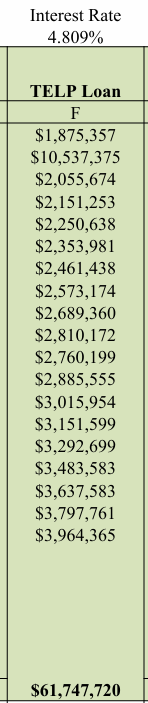
Pros and Cons of Using Measure Z to Pay Off the Solar Project Pros:
- The district won't need to pay for the solar debt in the future, which will reduce the expenditure from the general fund (about $1.8M per year).
Cons:
- It will impact the number of new projects Measure Z can support.
- The community may not anticipate or agree with this usage of funds.
CUSD Property Matters
Cupertino Union School DistrictDistrict staff presented on CUSD property matters at the board advance meeting on January 23, 2025. The presentation can be found here.
Current Property Conditions
Below is the screenshot for property current conditions.
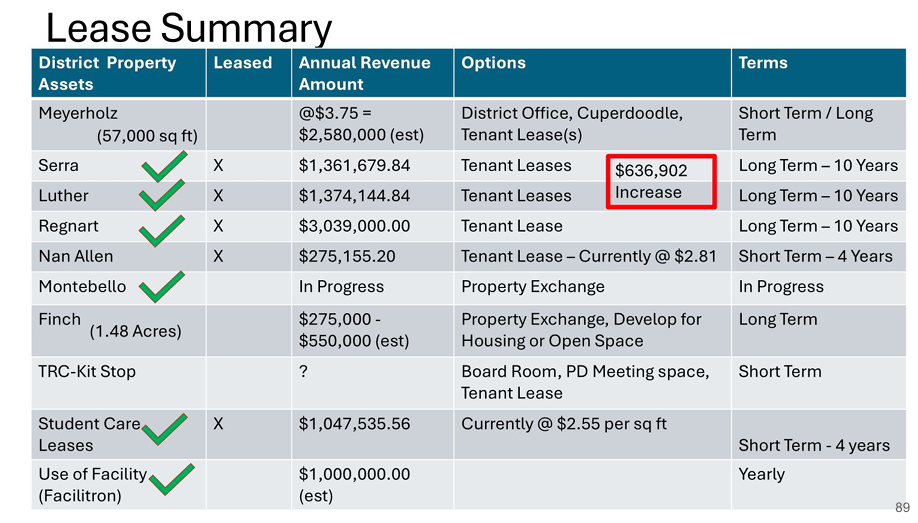
Options for Meyerholz and Finch
Meyerholz Elementary School:
- Meyerholz Elementary School, which was closed (see here for more detail), currently houses Cuperdoodle, a district-run preschool, utilizing the portable structures of Meyerholz. For more details, see here.
Finch Property:
- The Finch property is a 1.48-acre vacant lot purchased by the district around 2017. The house on the property was removed, and the contaminated soil was cleaned up. It is currently zoned R1-6, indicating single-family homes with a minimum 6,000-square-foot lot.
Finch Property Options During the meeting, several options for the Finch property were discussed:
- Central Kitchen
- District Educational or Recreation needs
- City needs
- Revenue generation
The first two options were briefly mentioned with high cost/maintenance. The option for city needs remains undecided due to a lack of formal communication with the City of Cupertino.
Potential revenue options: The consultant presented three potential revenue generation options.
- Senior Project:. Estimated value range is $5.5M - $6.5M, but this option was ruled out due to the site's unsuitability for a senior project.
- Single Family Project: Estimated value range is $9M - $10M.
- Townhome Project. Estimated value range is $10M - 11M. Please notice it would be up to developer to change the zoning.
The consultant advised that the district should not act as the developer. The recommended approach involves:
- Selling the property to a developer with a plan
- Purchasing another commercial property to generate rental revenue.
These steps can be combined to appear as an "exchange" to the district.
However, several questions require further exploration:
- Do we need to sell the Finch property? Keeping it vacant incurs maintenance costs, and the government might begin charging property taxes.
- If we sell the Finch property, should we exchange it for a commercial property?
(Disclaimer: this article is NOT investment advice.) According to investopedia, the S&P 500 index has significantly outperformed real estate over the last 50 years. Also,
- The index comprises 500 top companies, offering more diversification and lower risk than specific real estate investments.
- The index ETF also provides quarterly dividends, offering the district a cash flow as well.
- Additionally, the index ETF is a "buy and hold" investment, eliminating the need for property management, tenant acquisition, and concerns about natural disasters.
If we do it right, CUSD probably might never need to issue more bonds 50 years later.
Meyerholz Options
Currently, Cuperdoodle occupies the portables at Meyerholz. There are two rental options for Meyerholz: with or without the portables. Renting all buildings would generate more rental income, but the district would need to find a new site for Cuperdoodle if all buildings are rended out.
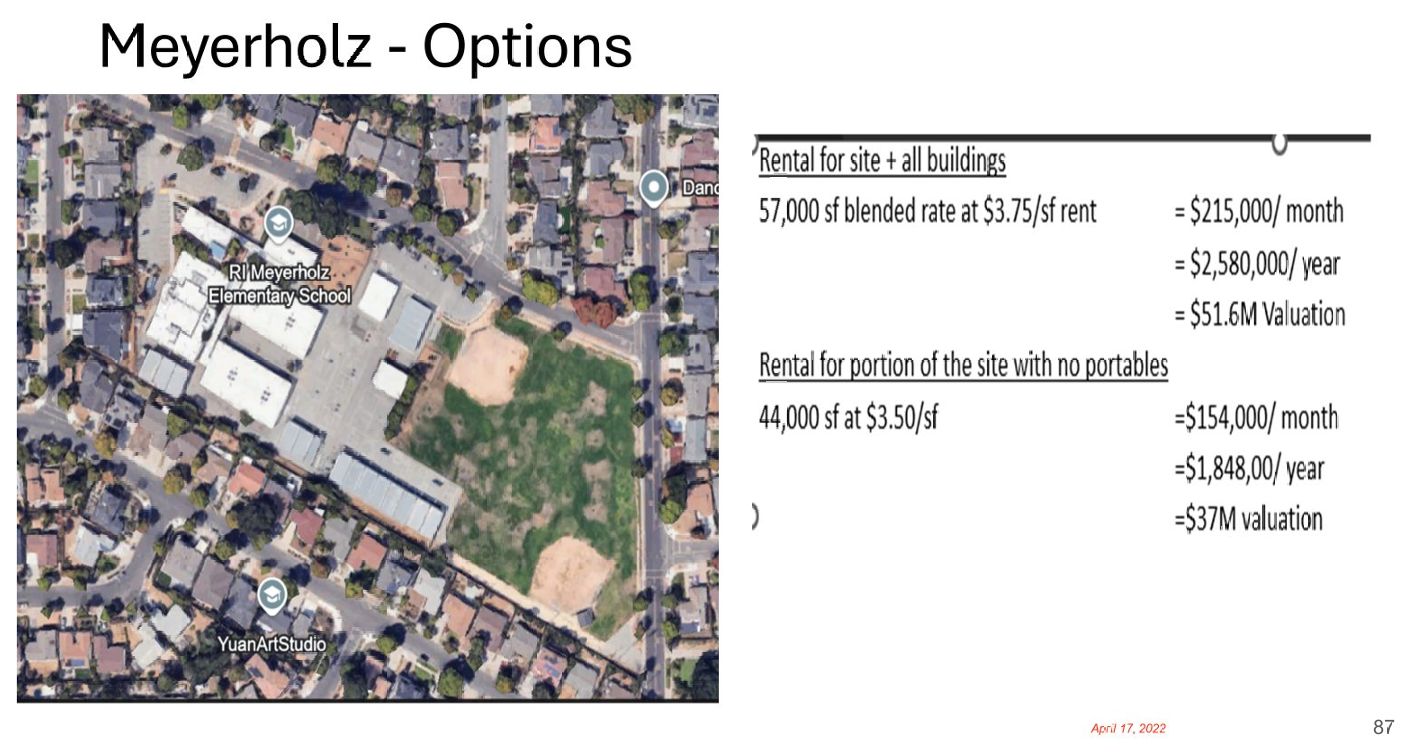
By-Trustee-Area Election in CUSD?
Cupertino Union School DistrictThe California Voting Rights Act (CVRA) of 2001 aims to prevent the dilution of minority voting power in at-large election systems. Unlike federal voting rights laws, the CVRA lowers the bar for minority groups to challenge governments using at-large elections, often prompting cities and school districts to switch to by-trustee-area elections to avoid costly litigation.
At-Large vs. By-Trustee-Area Elections
- At-Large Elections: All voters in a district elect every trustee, regardless of where they live within the district. The Cupertino Union School District (CUSD) currently uses this system.
- By-Trustee-Area Elections: The district is divided into separate geographic areas, each electing its own trustee. Voters cast ballots only for the trustee representing their specific area.
Recent Transitions in Neighboring Districts
- In 2024, the Fremont Union High School District, which encompasses the entire area of CUSD, shifted from at-large to by-trustee-area elections, sparking lively debate among local residents.
- Similarly, the Mountain View Los Altos High School District began transitioning to by-trustee-area elections in 2024, with the process still underway as of February 2025.
These changes highlight a growing trend in the region.
What Triggers a Transition
The shift to by-trustee-area elections often begins with a demand letter from an attorney citing the CVRA. Under the law, plaintiffs don't need to prove that a minority group is concentrated enough in a specific area to form a majority, giving them a legal edge. However, districts can resist the change if they demonstrate that no such concentration exists. For instance, the Palo Alto Unified School District received a demand letter but successfully argued that its minority populations were not sufficiently concentrated to justify by-trustee-areas, allowing it to retain at-large elections.
Potential Benefits and Drawbacks of By-Trustee-Area Elections
Benefits:
- Candidates campaign in smaller areas, making it easier to connect with voters.
- Campaign costs are typically lower due to the reduced geographic scope.
- Each major area of the district gains its own representative, which some view as fairer geographic representation.
Drawbacks
- CUSD might lack strong evidence that a minority group's voting power is significantly diminished by at-large elections, weakening the legal case for a change.
- Voter influence is reduced: In a five-trustee district with four-year terms, voters currently elect all five trustees over four years under at-large elections, but with by-trustee-area elections, they'd vote for only one trustee in that time.
- Trustees might prioritize their area's needs over the district's broader interests, potentially fragmenting decision-making.
Looking Ahead
By-trustee-area elections offer a potential path toward localized representation, but they also raise questions about voter influence and district unity. As CUSD considers its options -- possibly in response to a future attorney letter -- the trade-offs between these systems remain a critical topic for community discussion.
DEI in Education
Cupertino Union School DistrictIn a recent directive, the Trump Administration has mandated that all U.S. schools and universities eliminate their Diversity, Equity, and Inclusion (DEI) programs, threatening the loss of federal funding for noncompliance. Additionally, the administration has launched investigations into the admissions policies of Stanford University, UC Berkeley, UCLA, and UC Irvine, targeting what it describes as "race-based preferences" in an effort to enforce anti-DEI policies.
What is DEI?
DEI stands for Diversity, Equity, and Inclusion. These initiatives aim to promote opportunities for historically disadvantaged groups by addressing systemic barriers in education, employment, and other sectors. Proponents argue that DEI fosters fairness and broadens access, while critics contend that it can lead to preferential treatment for some groups and disadvantage others.
DEI and California Law
California’s stance on race and equity in public institutions is shaped by Proposition 209, passed in 1996. This measure amended the state constitution to prohibit public entities—including schools, universities, and government agencies—from considering race, sex, or ethnicity in public employment, contracting, and education. In 2020, Proposition 16 sought to repeal Prop 209 and restore the ability to use such factors, but voters rejected it. As a result, California’s public institutions remain legally barred from implementing race-, sex-, or ethnicity-based preferences.
The Trump Administration’s recent investigations into Stanford, UC Berkeley, UCLA, and UC Irvine signal a determined effort to uncover whether these universities are quietly defying California’s strict ban on race-based preferences in admissions. Despite the state constitution—via Proposition 209—explicitly prohibiting such practices, the administration suspects these institutions may be secretly favoring certain racial groups, and it has threatened to cut federal funding if evidence of these hidden “race-based preferences” comes to light.
Cupertino Union School District’s Position
The Cupertino Union School District (CUSD) does not currently operate formal DEI programs. Given this, and California’s existing legal framework under Prop 209, CUSD appears unlikely to be directly impacted by the administration’s anti-DEI measures or funding threats.
DEI in College Admissions and Workplace Hiring
The debate over DEI extends to college admissions and workplace hiring, where DEI initiatives can sometimes conflict with purely merit-based approaches. DEI-focused policies often aim to balance representation across factors like gender, race, or other identities, emphasizing systemic equity. In contrast, merit-based systems prioritize individual qualifications, such as academic achievements or professional skills, without regard to demographic characteristics. Both approaches spark discussion: DEI advocates highlight the need to address historical inequities, while merit-based proponents argue for evaluating candidates solely on their abilities.
These approaches reflect distinct philosophies. DEI policies often group individuals by identity categories to achieve balanced representation across diverse groups. Merit-based policies, however, focus on treating each candidate as an individual, emphasizing their unique qualifications and contributions without reference to group identity. Both perspectives fuel ongoing discussions about fairness, opportunity, and the best path to equitable outcomes.
PAUSD’s Biology Course Merger Sparks Debate on Equity and Excellence
Cupertino Union School DistrictOn January 21, 2025, the Palo Alto Unified School District (PAUSD) board voted 3-2 to merge its 9th-grade Biology Honors and standard biology courses into a single curriculum, a process known as de-tracking. This decision has ignited significant debate, drawing both local and national attention.
A Push for Equity
PAUSD cited equity as a key rationale for the change. By offering one biology course, the district aims to “reduce stigma and labels” and foster “inclusion and diversity,” ensuring all students receive the same foundational education. Supporters argue this approach promotes fairness and equal opportunities for learning.
Criticism and Concerns
The decision has faced pushback. Local U.S. Representative Ro Khanna called it “absurd” and an “assault on excellence,” arguing that eliminating honors courses could undermine academic rigor for high-achieving students. Critics question whether a unified curriculum can meet the diverse needs of all learners without compromising advanced instruction.
SFUSD’s Equity Grading Proposal Sparks Debate
Cupertino Union School DistrictIn May 2025, the San Francisco Unified School District (SFUSD) superintendent proposed an equity grading system for 14 high schools, bypassing school board approval. After swift backlash, the plan was canceled, but it raises questions about grading fairness and educational quality.
What Is Equity Grading?
The proposed system aimed to simplify grading and reduce disparities. Key features included:
- Wider grade ranges: On a 100-point scale, grades were assigned every 20 points (e.g., 80+ for A, 60–79 for B, 40–59 for C, 20–39 for D, below 20 for F), compared to traditional 10-point increments (90+ for A, 80–89 for B, etc.).
- Final exam focus: Grades depended solely on a final exam, which students could retake multiple times, excluding factors like homework or attendance.
Proponents argued this would reduce stress and promote equity by leveling the playing field. Critics, however, warned it could inflate grades and lower academic rigor.
Impact on Students and College Admissions
Equity grading could significantly boost students’ Grade Point Averages (GPAs), a critical factor in college admissions, especially in California, where the University of California system no longer considers SAT or ACT scores. Higher GPAs might give SFUSD students an edge, but colleges could adjust evaluations if grade inflation is widespread. How would this reshape admissions fairness?
Does Equity Grading Support Quality Education?
As a CUSD board member, I believe our district’s primary goal is to provide high-quality education. Critics of SFUSD’s equity grading argue it may prioritize equal outcomes over academic mastery, potentially undermining rigor. Supporters counter that it addresses systemic barriers, enabling more students to succeed. This debate prompts us to examine what “equity” means in education and whether it aligns with delivering excellence.
Relevance to CUSD
In the Cupertino Union School District (CUSD), we prioritize personalized learning, offering differentiated pathways like math tracking in middle school. SFUSD’s proposal encourages us to reflect: Should we consider alternative grading models, or continue emphasizing tailored education?
LGBTQ Content and Parents' Rights in Schools
Cupertino Union School DistrictIn June 2025, the Supreme Court issued a preliminary injunction in Mahmoud v. Taylor, affirming parents' rights to opt their children out of LGBTQ-themed instructional materials in schools, citing the First Amendment's free exercise of religion clause. This ruling applies nationwide, impacting all U.S. school districts, including the Cupertino Union School District (CUSD).
Implications for CUSD
The decision requires CUSD to take specific actions to comply with federal law and respect parental rights:
- Develop clear opt-out processes for parents to exempt their children from LGBTQ-related materials
- Provide teacher training and guidelines on handling LGBTQ-themed content sensitively and compliance with the ruling
- Review board policies to ensure alignment with the Supreme Court's decision and other legal requirements
In CUSD, the Opening Day Packet includes language below in E.8 under Curriculum and Instruction:
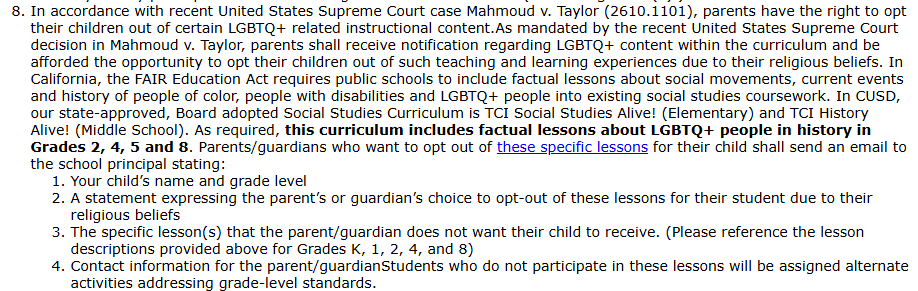
Community Concerns and Context
Before my election to the CUSD board, some parents raised concerns at board meetings about the use of LGBTQ-related books and content in classrooms. The Mahmoud v. Taylor ruling, grounded in religious freedom, highlights the need to examine not only LGBTQ content but also other materials that may conflict with religious beliefs. For example, the Santa Clara County Office of Education recently encouraged schools to display posters promoting inclusivity, which some view as conflicting with certain religious values.

Balancing Inclusion and Religious Sensitivities
The Supreme Court's decision prompts us to consider educational content that may intersect with religious beliefs. Potential areas of concern include:
- Stories featuring animals considered impure in some faiths (e.g. Peppa Pig for some Muslims)
- Evolution theory in science curricula, which may conflict with literal interpretations in some Christian or Islamic traditions
- Lessons on gender identity or LGBTQ+ issues, which may raise concerns for some religious families
- Celebrations of holidays like Halloween or Christmas, potentially seen as non-inclusive by many families.
- Literature involving magic, such as Harry Potter, which some religious groups associate with occult practices
- Activities involving non-kosher foods, which may conflict with Jewish dietary laws
- Historical discussions, like the mistreatment of Alan Turing, a renowned mathematician and computer scientist, for his homosexuality, which may spark debate in some religious communities
- Science lessons asserting the Earth is round, which may conflict with rare flat Earth beliefs
- Lessons on the science of electronics, which may be sensitive for communities like the Amish who limit technology use to preserve religious values
Opt-In or Opt-Out
CUSD plans to include an opt-out form in the Opening Day Packet, allowing parents to exempt their children from LGBTQ-themed instructional materials. If parents fail to return the form, their children will participate in this instruction.
In contrast, the Howell Mountain School District in Napa County is considering an opt-in form. If parents do not return the opt-in form, their children will not participate in LGBTQ-themed instruction.
What are your thoughts on the best approach for CUSD?
Fostering a Sense of Belonging
At CUSD, creating a sense of belonging for all students is a priority. How do we balance inclusivity with respect for diverse religious and cultural values? The Mahmoud v. Taylor ruling invites us to explore this question, ensuring every student and family feels respected while maintaining high-quality education.
In response to Texas’s 2025 mid-decade redistricting plan, which aims to add five Republican-leaning congressional seats, California Governor Gavin Newsom has proposed Proposition 50 to redraw California’s congressional districts to favor Democrats, offsetting potential losses in Congress. This proposal, driven by the Democratic supermajority in the state legislature, seeks to temporarily transfer redistricting authority from the California Citizens Redistricting Commission (CRC) to the legislature for the 2026, 2028, and 2030 elections.
Legal Context and Constitutional Changes
Under the California Constitution, the CRC, an independent 14-member body established by Proposition 11 (2008) and Proposition 20 (2010), is responsible for redrawing congressional and state legislative districts every decade following the federal census. Mid-decade redistricting is prohibited unless ordered by a court, as clarified in Legislature v. Deukmejian (1983). To enable Proposition 50, two constitutional amendments are proposed:
- Transferring redistricting power from the CRC to the state legislature for congressional maps until 2030.
- Allowing mid-decade redistricting without a court order.
The state Assembly and Senate passed these amendments with a two-thirds supermajority in August 2025. Proposition 50 now requires approval by more than 50% of California voters in a special election on November 4, 2025, to take effect.
Controversy and Public Response
Proposition 50 has sparked significant debate. Supporters, including Governor Newsom, argue it’s a necessary countermeasure to Texas’s redistricting, which passed the Texas House on August 20, 2025, to strengthen Republican control of Congress. They view it as protecting California’s interests in a national “redistricting war.” Opponents, including the California Republican Party and former Governor Arnold Schwarzenegger, contend it undermines the CRC’s nonpartisan process, risking partisan gerrymandering and eroding voter trust.
A recent controversy involved a flyer from the Voters First Act, which quoted the League of Women Voters of California’s president opposing mid-decade redistricting. The League distanced itself from the flyer on its website but reaffirmed its opposition to mid-decade redistricting, advocating for independent and transparent redistricting processes.
Implications for California
Proposition 50 could reshape California’s congressional representation, potentially affecting federal funding and policies that impact education, including in districts like Cupertino Union School District (CUSD). With 45% of California children having at least one immigrant parent, fair representation is critical for communities with diverse needs. The outcome of the November 4, 2025, election will determine whether California adopts this unprecedented mid-decade redistricting approach.
Teachers Fired for Speech: Recent Cases and Implications
Cupertino Union School DistrictIn recent years, several teachers have been terminated for expressions related to social or political topics, either in the classroom or on personal social media. These incidents span diverse viewpoints and have fueled ongoing discussions about free speech protections for public educators versus institutional expectations for neutrality. The following examples outline key details from three such cases.
2023, St. Philip's College, Texas: Adjunct biology professor Johnson Varkey was fired after stating in class that biological sex is determined by X and Y chromosomes, prompting student complaints of discrimination and walkouts. He was reinstated following a settlement with the college. Link
2023, Jurupa Unified School District, California: Tenured PE teacher Jessica Tapia was terminated for declining to use students' preferred pronouns and for not disclosing students' gender transitions to parents, citing her religious beliefs. The district reached a $360,000 settlement with her in 2024. Link
2025, Jourdanton High School, Texas: Social studies teacher Matthew Justin Holland was placed on administrative leave and later unanimously fired by the school board after a social media post about the assassination of conservative activist Charlie Kirk on September 10, 2025, gained widespread attention. The post was made outside school hours. Link
In two of these cases, the initial terminations were followed by settlements or reinstatements, while the third proceeded to final termination. Such outcomes highlight varying approaches to handling teacher speech, particularly when it occurs off-campus. These situations prompt consideration of several issues in educational policy and employment:
To what extent should school districts regulate teachers' expressions made outside of work?
How do district guidelines align with legal protections for free speech and personal beliefs?
In what ways do public reactions influence decisions about employee conduct?
These cases contribute to wider conversations on the boundaries of expression in public schools.
CUSD Fiscal Stabilization Plan
Cupertino Union School DistrictOverview
The Cupertino Union School District (CUSD) is addressing ongoing budget challenges through a fiscal stabilization plan. This initiative aims to reduce deficits proactively, maintain adequate reserves, and minimize impacts on educational programs. The following provides background on the current fiscal situation and proposals discussed at the October 30, 2025, Board Advance meeting.
Current Fiscal Context
CUSD faces pressures from declining enrollment, lost local revenues, and external funding uncertainties:
Deficits: Fiscal Year (FY) 2024-2025 closed with a deficit exceeding $26 million. FY 2025-2026 projections indicate a shortfall of more than $11 million.
Reserves: Board-designated reserves are expected to drop below 5% of the annual budget, compared to the district's 10% target. Neighboring districts often maintain around 20% reserves for added stability.
Revenue Loss: The district has lost approximately $8 million annually from the expired parcel tax since 2024.
Broader Factors: Federal cuts and state budget volatility, including Local Control Funding Formula (LCFF) adjustments, exacerbate challenges for Basic Aid districts like CUSD.
These trends underscore the need for targeted efficiencies to avoid larger program reductions in the future.
Board Advance Discussion: Targeted Reductions
District staff presented a plan for $8 million in savings, focusing on:
Middle school elective offerings
Transitional Kindergarten (TK) adjustments
Early retirement incentives
Cuperdoodle program changes
Emphasis is on middle school electives and TK, potentially yielding $4–5 million combined. Details follow.
Middle School Electives
Electives such as band, foreign languages, woodshop, and photography support student engagement. Recent changes include:
Pre-2025: Offerings varied by school (e.g., two electives for 7th/8th graders at some sites, one for 6th graders).
FY 2025-2026: Expansion to two electives for all 6th–8th graders, enabled by enrollment declines without new hires.
With continued enrollment at lower levels, proposed options balance access and costs:
Option 1: 7th/8th graders may opt for a second elective; 6th graders receive one. Projected impact: ~18 full-time employees (FTEs) reduction in middle school staff. Estimated savings: ~$2.1 million.
Option 2: All 7th/8th graders receive two electives; 6th graders receive one. Projected impact: ~13 FTEs reduction. Estimated savings: ~$1.5 million.
Option 3 (Status Quo): All 6th–8th graders receive two electives, accounting for enrollment declines. Projected impact: Minimal staff changes. Estimated savings: ~$0.6 million.
Option 4: All 6th–8th graders may opt for a second elective (voluntary). Projected impact: Savings pending analysis; aligns staffing with participation. Estimated savings: To be determined.
All options ensure at least one elective per student.
Transitional Kindergarten (TK)
TK, a statewide pre-K program for four-year-olds, aids kindergarten readiness but poses funding issues for Basic Aid districts:
- No state funding per TK student (vs. ~$5,545 extra for LCFF districts).
- Mandated 1:10 adult-to-pupil ratio (vs. 1:20 or more for other grades), nearly doubling per-pupil costs.
Serving ~720 students currently, proposed adjustments include:
Option 1: Half-day classes; no enrollment cap. Projected impact: TK teachers and instructional assistants (IAs) reduced to 60% contracts. Estimated savings: ~$2.5 million.
Option 2: Full-day classes; cap enrollment at 360 students. Projected impact: ~36 teacher/IA positions eliminated. Estimated savings: ~$3.2 million.
Option 3: Split-day classes (e.g., alternating schedules). Projected impact: ~36 teacher/IA positions eliminated. Estimated savings: ~$2.5 million.
These maintain significant TK capacity while reallocating resources to K–8 priorities.
Next Steps
The board will review and vote on the stabilization plan at the board meeting on 11/20/2025.
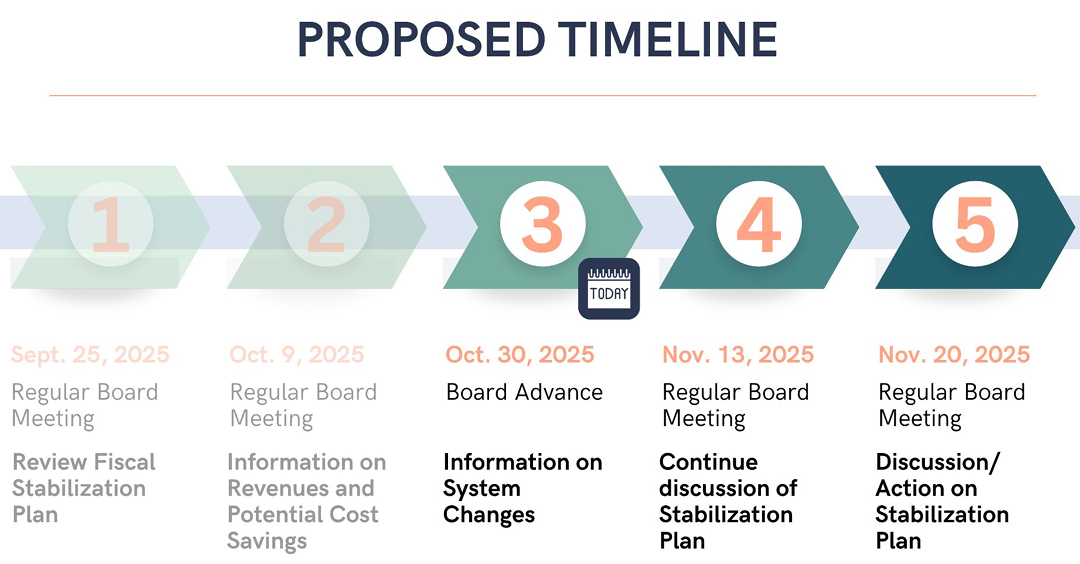
Student Privacy vs. Parental Rights
Cupertino Union School DistrictOn December 22, 2025, a federal district court issued a significant ruling in the case of Mirabelli v. Olson. The judge granted a class-wide permanent injunction against the State of California, fundamentally altering how schools handle student information regarding gender identity and medical privacy.
The Court's Key Findings
The ruling centers on the tension between state privacy mandates and federal constitutional protections. The court reached three primary conclusions:
- Parental Rights: Under the 14th Amendment, parents have a "fundamental right" to be informed of significant issues affecting their child's health and well-being.
- Teacher Rights: Forcing school staff to withhold information or provide misleading answers to parents violates the teachers' First Amendment rights to free speech and religious exercise.
- Supremacy of Federal Law: The court mandated that school training materials must now explicitly state that federal constitutional rights to parental notification are superior to any conflicting state or local laws.
The Core Conflict: Autonomy vs. Guardianship
This ruling highlights a deep legal and ethical divide:
The State's Position: California emphasizes that minors are individuals with an independent right to privacy. The state argues that confidentiality is necessary to protect students who may face a hostile environment at home.
The Federal Court's Position: The court asserts that because minors are not yet fully mature, they require the guidance of their parents. Therefore, a parent's right to oversee their child's upbringing outweighs the school's interest in maintaining secrecy.
Beyond Gender Identity: Implications for Reproductive Health
While Mirabelli v. Olson specifically addressed "social transitions" (name and pronoun changes), the legal logic may extend to other confidential services. Currently, California Education Code § 46010.1 allows schools to excuse students for "confidential medical services" -- including abortion and reproductive care -- without parental consent or notification.
The following table illustrates the current legal landscape following the injunction:
Topic Pre-Mirabelli Status Post-Mirabelli (Current) Gender Identity Schools were required to keep transitions confidential from parents. Schools are forbidden from requiring secrecy, teachers may inform parents. Reproductive Health Strictly confidential under EdCode § 46010.1. The Statue remains, but the ruling creates a precedent that parental rights may override this state law.What's Next?
The ruling in Mirabelli v. Olson is not yet the final word. The State of California is expected to appeal the decision to the Ninth Circuit Court of Appeals. Legal experts view this as a "test case" that is likely to be petitioned to the U.S. Supreme Court to establish a national standard for parental rights in education.
Rebranding "Equity": The New Face of Grade Reform in the Tri-Valley
Cupertino Union School DistrictThe debate over how we grade our students is reaching a boiling point in the East Bay. What started as a controversial movement in San Francisco has now arrived in the Tri-Valley—but under a new set of names.
The SFUSD Precedent
In May 2025, the San Francisco Unified School District (SFUSD) attempted to mandate a district-wide "Grading for Equity" system. The proposal was met with fierce community opposition, leading the Superintendent to pull the plan. Critics argued the system lowered standards and reduced student accountability.
The Tri-Valley Shift (January 2026)
As of January 2026, school districts in Dublin, Livermore, Pleasanton, and San Ramon are actively considering or rolling out similar reforms. However, you won’t find the word “Equity” in many of the new proposals. Instead, administrators are using terms like:
- Standards-Based Grading
- Mastery-Based Assessment
- Grade Reform
The Architect: Joe Feldman
Behind these changes is Joe Feldman, author of Grading for Equity and the consultant who advised SFUSD. While Tri-Valley districts are using his framework, many are taking a "buffet" approach—adopting some of his methods while discarding others that proved too controversial.
For example, due to parent feedback, most local districts have abandoned the "50% minimum floor" (the practice where a student cannot receive lower than a 50%, even for missing work).
What is actually changing?
Proposed policies currently under review (including a major vote expected in SRVUSD between February and April 2026) include:
- Eliminating the +/-: An 89% becomes a B; a 91% becomes an A. This aims for "consistency" but has sparked debate among students worried about GPA impact.
- Redos and Retakes: Providing multiple opportunities for students to demonstrate mastery of a subject.
- Separating Behavior from Academics: Eliminating "participation points" or "extra credit" for bringing in classroom supplies, ensuring the grade reflects only what the student has learned.
- Softening Deadlines: Encouraging teachers to reduce or eliminate point deductions for late work.
Why the Rebrand?
Officials state that terms like "Mastery-Based" better describe the goal: ensuring every student actually learns the material. Critics, however, argue that "Mastering-Based" is simply a rebranding of "Equity Grading" designed to bypass the same community pushback that happened in San Francisco.
What do you think?
Does removing the +/- scale make grading fairer, or does it hurt high-achieving students? Is "Mastery" a better goal than "Accountability"?
The 2023 California Math Framework: A Multi-Year Roadmap for Change
Cupertino Union School DistrictWhile the 2023 California Mathematics Framework (CMF) has been a topic of debate for several years, the state-level process reached a major milestone this past November. On November 6, 2025, the California State Board of Education officially approved a list of 64 instructional programs for K–8 and Algebra I that align with the new framework.
This marks the end of the state’s vetting process. The "adoption cycle" has now moved from the state level to individual school districts. While each district determines its own timeline for reviewing and adopting new materials—with many likely looking toward the 2027–2028 school year or beyond—the philosophies contained in these new state-approved books represent a significant shift in how math may be taught in the future.
The Goal: "Equity and Excellence" The California Department of Education (CDE) describes the new framework as a "Step Forward for Equity and Excellence." These terms represent the dual goals of the state’s vision:
- Equity: The goal of ensuring all students—regardless of background—have access to high-quality math and are not "tracked" out of advanced opportunities too early.
- Excellence: The goal of raising the bar for all students through deep problem-solving and data literacy, skills essential for a 21st-century workforce.
The "New Generation" of Math Philosophy: Trade-offs to Consider
The programs recently approved by the state represent a shift from traditional math instruction. Each pillar of this new philosophy carries potential benefits and common concerns that communities are currently weighing:
1. Active "Inquiry-Based" Learning
This shift moves away from the teacher providing a formula first. Instead, students "investigate" a complex task in groups to discover the logic themselves.
- Pros: Encourages "productive struggle" and deeper conceptual understanding. Proponents argue it makes math more joyful and relevant, which can reduce math anxiety and increase student engagement.
- Cons: Critics worry that without enough "Direct Instruction," students may fail to develop "automaticity" (speed and accuracy) with basic math facts. There is also concern that this method is less efficient, potentially leaving less time to cover the full curriculum.
2. Organization by "Big Ideas"
New textbooks group standards into 8–10 broad themes (e.g., "Data as a Tool" or "Patterns in the World") to show how math is interconnected across grades.
- Pros: Helps students see math as a unified language rather than a list of disconnected skills. It answers the common question, "When will I ever use this?" by placing math in a real-world context.
- Cons: Some educators fear this "integrated" approach can lead to a "fuzzier" curriculum where the mastery of discrete, rigorous skills—like factoring polynomials or long division—is glossed over in favor of broad concepts.
3. "Heterogeneous" (Mixed-Ability) Grouping
The framework encourages keeping students of all ability levels in the same classroom for longer (often called "de-tracking").
- Pros: Promotes equity by ensuring all students have access to high-quality content and prevents students from being "labeled" as low-achievers early in their education. It allows for peer-to-peer learning.
- Cons: Opponents argue that "one size does not fit all" and that mixed-ability classrooms can be extremely difficult for teachers to manage. There is concern that advanced learners may feel "held back" while struggling learners may feel overwhelmed without targeted, leveled support.
The Data Science vs. Calculus Debate
A core feature of the CMF is its emphasis on Data Science as a rigorous and relevant pathway. However, this has recently met with a significant policy shift from California's universities:
- The Framework’s Vision: To promote data literacy and statistics as a valid alternative to the traditional Calculus-focused track, making math more accessible to more students.
- The UC/CSU Reality: The University of California and California State University systems have clarified that Data Science courses no longer satisfy the "Area C" (Advanced Math) requirement in the same way Algebra II does. Students who take Data Science instead of Algebra II may find themselves ineligible for admission to these universities.
The 2026 "Study Phase"
Because the state-approved list of textbooks is now final, 2026 serves as an important "study phase." This period allows parents and community members to observe how these new instructional styles and "Big Ideas" align with local standards for academic rigor and student potential.
Understanding these state-level changes now ensures that as local districts eventually begin their own review processes in the coming years, the conversation is guided by a clear understanding of the options and trade-offs provided by the state.
Racial Preference in California? Understanding the Shift toward ACA 7
Cupertino Union School DistrictThe Constitutional "Wall"
For three decades, Proposition 209 has served as a constitutional "wall" in California. Passed by voters in 1996, it prevents school districts and government agencies from using race, gender, or ethnicity as a factor in admissions, hiring, or program placement. In 2020, California voters reaffirmed this principle by defeating Proposition 16, which sought a total repeal of those protections.
From Prop 16 to ACA 7
Following the defeat of Prop 16, proponents introduced ACA 7 with a more surgical approach. Unlike previous attempts at a total repeal, the current version (passed by the Assembly in February 2026) seeks to narrow the scope of the state’s equal treatment rules. It proposes to delete "public education" from the constitutional list of areas where racial and gender preferences are prohibited. While the bill adds a specific ban for "higher education admissions" to comply with U.S. Supreme Court rulings, it removes constitutional protection for the rest of the education system.
The K-12 and Resource Focus
By removing the broad "public education" category, ACA 7 effectively eliminates the equal treatment mandate for K-12 schools and university-level resource allocation (such as grants and specialized funding). This shift would grant school districts like CUSD the authority to once again use race, gender, or ethnicity as a factor in student acceleration, specialized enrollment, and the distribution of educational resources. This version ensures that while college admissions remain colorblind, the "pipeline" leading up to them—and the resources within them—can be legally managed through racial preferences.
Next Steps and Local Representation
The Assembly passed ACA 7 on February 19, 2026. Patrick Ahrens and Marc Berman, the Assemblymembers who represent the CUSD area, both voted "Yes" on the measure. The bill is now in the State Senate. Because it is a Constitutional Amendment, your State Senators (Josh Becker, Dave Cortese, and Aisha Wahab) will have the final say on whether this reaches your ballot for voter approval this November.
Rethinking the Digital Classroom: A Look at LAUSD’s "Using Technology with Intention" Policy
Cupertino Union School DistrictBackground
On April 21, 2026, the Los Angeles Unified School District (LAUSD) Board of Education unanimously approved a landmark resolution titled "Using Technology with Intention." This policy marks a significant pivot for the nation’s second-largest school district, transitioning from a "1:1 device" focus to a regulated model that prioritizes human interaction and developmentally appropriate screen limits.
The Evolution of the Digital Classroom
For districts like Cupertino Union (CUSD), 1:1 technology is not new. CUSD was an early adopter, implementing iPad programs in middle schools as far back as 2013. However, the 2020 pandemic served as a massive "accelerant," expanding 1:1 device programs down to the youngest elementary grades and normalizing a "digital-first" curriculum.
As LAUSD board members and a coalition of parents (known as Schools Beyond Screens) argued, while these tools were a necessary lifeline during school closures, their permanent, unregulated presence in classrooms post-pandemic has led to a "recalibration" crisis.
Key Provisions of the LAUSD Policy (Effective 2026-27)
- Total Ban for Youngest Learners: Students in Transitional Kindergarten (TK) through 1st Grade will no longer use district-issued digital devices for instruction, except for mandatory assessments.
- Mandatory Screen Time Caps: The district must establish maximum daily and weekly screen time limits for students in Grades 2–12, tailored by grade level and subject area.
- "Screen-Free" Social Times: Devices are prohibited during passing periods, lunch, and recess to encourage social development.
- Content Restrictions: A "hard block" on student-led use of YouTube and other streaming/gaming platforms on all district hardware.
- Return to Tactile Learning: The resolution explicitly encourages the use of "paper and pen" and the reprioritization of physical textbooks over digital-only curriculum.
The Scientific Basis
The LAUSD Board cited data from the American Academy of Pediatrics linking excessive screen use to increased anxiety, depression, and reduced attention spans. Board Member Nick Melvoin, the lead sponsor, noted that during the pandemic, screen-time limits were effectively "shelved," and the goal now is to restore balance.
Implications for CUSD
As a district that has navigated 1:1 technology for over a decade, CUSD is uniquely positioned to evaluate these changes. LAUSD’s move asks a question many Cupertino parents have raised for years: At what point does a powerful educational tool become a primary source of digital distraction?
Proposed changes to Board Policy 9200 — "Limits of Board Member Authority"
Cupertino Union School DistrictPosted by Long Jiao, CUSD Board of Education. I'm sharing this so our community can weigh in before the Board votes this summer. The background below is meant to lay out the change fairly; my own view is in a clearly marked section at the end.
What BP 9200 is
Board Bylaw 9200 defines what an individual board member can and cannot do. The core principle is long-standing: a school board acts as a unit, and a single member does not run the district, direct staff, or speak for the Board on their own. The California School Boards Association (CSBA) has recommended updates to this bylaw (along with several others). These are model recommendations — the Board may adopt, modify, or decline them.
What's being proposed
See the redline here.
- Board members who are parents in the district.
- Current: a board member "should inform the Superintendent or designee before volunteering in his/her child's classroom."
- Proposed: "Prior to observing or volunteering, a Board member shall inform the Superintendent," and for a concern that is "both specific to the Board member's child and involves operational or personnel matters," the member "shall collaborate with the Superintendent… to determine whether" they may take it to site staff.
- Stated rationale: a board member's presence can unintentionally pressure school staff, and the district has an interest in preventing any appearance of preferential treatment for a member's own child.
- How members handle constituent concerns.
- Current: "Individual Board members do not have the authority to resolve complaints. Any Board member approached directly by a person with a complaint should refer the complainant to the Superintendent or designee so that the problem may receive proper consideration and be handled through the appropriate district process." (A member may not resolve a complaint and should refer the person to the Superintendent — but the current text does not restrict listening to or discussing the concern.)
- Proposed: individual members have "no authority to investigate, resolve, or otherwise actively engage with community members" on complaints, personnel, student, or legal matters, and "shall not respond substantively… beyond acknowledging receipt and explaining the limits of the Board member's authority." A member may still engage on "general inquiries or expressions of opinion."
- Stated rationale: keep the Board acting as a unit, route matters through the Superintendent, and avoid individual members investigating or directing staff.
Considerations on each side
In favor of the changes: clearer guardrails; protects school staff from feeling pressured by a board member; reduces the risk (or appearance) of special treatment; reinforces that the board acts collectively and that operations run through the Superintendent.
Concerns raised about the changes: they may reach beyond those guardrails. State law (Education Code 51101) gives every parent the right to be involved in their child's education, and the bylaw itself says that right "is not affected upon election to the Board" — yet the new requirements (notify first; get sign-off to raise certain concerns about your own child) do affect it. On constituent concerns, barring a member from responding "substantively… beyond acknowledging receipt" could prevent even understanding an issue or following up on whether policy was followed — which is closer to representation and oversight than to "administrative authority."
My view and what I'm proposing
(This section is my personal opinion as a board member.)
I support the principles here — the board acts as a unit, members shouldn't direct staff or seek special treatment. My concern is that the new language overshoots on two points, and I plan to propose amendments.
On parents who serve: I don't believe serving on the board should shrink your rights as a parent. The real risk — using your office as leverage — is better addressed directly than by making a parent ask permission to help in their own child's classroom. I'm proposing:
A Board member who is the parent/guardian of a district student retains all rights afforded to parents/guardians under law — including observing and volunteering in their child's school or classroom and communicating with staff about their child — on the same basis as any other parent/guardian. When acting as a parent/guardian, a Board member shall not invoke their position on the Board, request preferential treatment for their child, or direct staff. Matters concerning district operations or policy generally, as distinct from the Board member's own child, remain subject to the limits on individual Board member authority.
On listening to constituents: a member shouldn't investigate, direct, or decide — but should be able to understand your concern and follow up through the Superintendent to confirm policy was followed. I'm proposing:
The Board member may gather relevant details to understand the concern, shall refer the matter to the Superintendent or designee, and may follow up with the Superintendent or designee to confirm the matter is being addressed consistent with district policy and law. An individual Board member shall not direct staff, conduct an independent investigation, or determine the outcome of the matter.
Below are the proposed redlines.
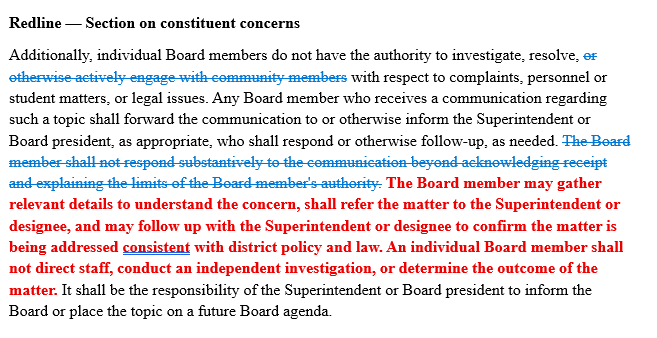
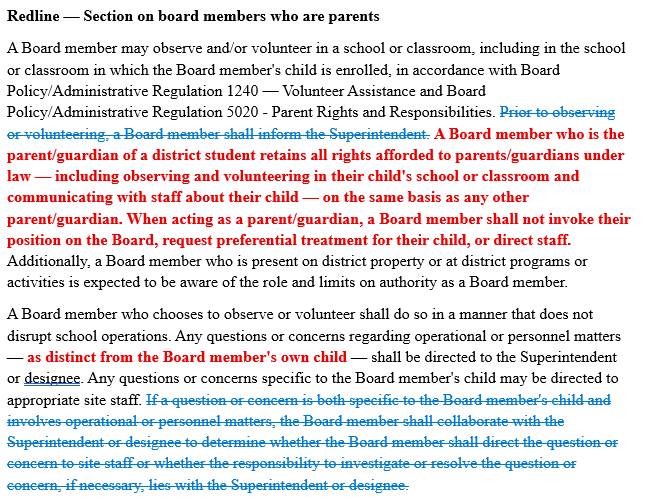
The Sunnyvale LGBTQ+ Curriculum Opt-Out Lawsuit — and What It Means for CUSD
Cupertino Union School DistrictNote: I've prepared this background as an individual member of the CUSD Board of Education. It is my own effort to inform the community and does not represent the official position of the full CUSD Board. I've tried to present both sides fairly; the discussion below is open to all views.
What's happening
A family in the neighboring Sunnyvale School District has sued the district in federal court (Taylor v. Sunnyvale School District, filed June 22, 2026). The parents asked to be notified and to opt their elementary-age children out of LGBTQ+-inclusive books and lessons on religious grounds. The district initially offered an opt-out (fall 2025), then reversed course in early 2026, stating the instruction "is not optional and is not subject to parent opt-out provisions." The family is represented by the Becket Fund and a Pepperdine law clinic.
The legal tension (this is the real crux)
The case sits between two authorities pointing in opposite directions:
- Mahmoud v. Taylor (U.S. Supreme Court, June 2025, 6–3): parents have a First Amendment religious right to notice and an opt-out when LGBTQ+ storybooks are used in instruction.
- California law (the FAIR Education Act and related Education Code): districts must provide LGBTQ+-inclusive instruction as part of the core curriculum, which the district read as not subject to opt-out.
So a California district is caught between a federal constitutional ruling and a state mandate — and that same tension applies to CUSD.
What each side argues
- Parental-rights view: families, not schools, should have the final say over religious/moral exposure for young children; the Supreme Court has now recognized a right to opt out.
- Inclusive-curriculum view: an inclusive curriculum reflects all families and students, state law requires it, and carve-outs undermine both the law and the students it's meant to include.
Where CUSD Stands
Unlike Sunnyvale, CUSD currently allows religious opt-outs. Per the district's public 2026-2027 Opening Day Packet / Annual Notification:
- The opt-out exists. "In accordance with federal guidance, as outlined in Mahmoud v. Taylor and Board Policy 6141.2, parents/guardians may, via written request, opt their students out of instruction on the basis of their religious beliefs." An opted-out student may be offered an alternative activity of similar educational value, with no disciplinary or academic penalty.
- The request must be specific. A parent must identify the student, the specific instructional content, the specific religious belief(s) involved, and how that content "substantially interferes" with those beliefs.
- Board-adopted vs. supplemental materials. All families are notified of the Board-adopted curriculum, which — under California's FAIR Education Act — includes LGBTQ+-inclusive content in Social Studies. Teachers may also use supplemental materials (Board Policy 6161.11).
- Notice of supplemental materials is now opt-in. For 2026-2027, to receive notice when supplemental lessons are used — the notice a parent needs in order to request an opt-out — a parent must ask in advance, by emailing the principal by August 27, 2026 (or within 10 days of the child's first day). Previously, these notices went to the whole class.
In short: CUSD kept the opt-out, but for the coming year a parent must proactively request supplemental-material notices to be positioned to use it.
Why it matters for CUSD
Two questions for our community: first, does CUSD's current approach — a retained opt-out, but opt-in notification for supplemental materials — strike the right balance? Second, who should decide changes in a contested area like this: the elected Board, or district administrators?
At the September 1 Cupertino City Council meeting, several residents used the public-comment period to raise concerns about campaign signs — describing signs being removed or damaged, signs placed on their property without permission, and, in one account, a candidate misrepresenting a neighbor's support. You can watch the public comments in the city's meeting recording. It's worth stepping back from any single race to talk about why this keeps happening — and what your rights as a resident actually are.
It's campaign season in Cupertino, and — as in many election years — residents are again reporting campaign signs being pulled, damaged, or placed where they don't belong. It's easy to shrug off a missing lawn sign as small-time mischief. I'd like to make the case that it isn't, and that how we treat each other's signs says something about the health of our local democracy.
A personal note. When I ran for the Cupertino Union School District board in 2024, one of my volunteers went out one morning to check on our signs and found several of them pulled out of the ground and left lying on the lawn. What bothered me wasn't the cost of a sign — it was the message it sent: that someone had decided the people who'd volunteered their time and put their names behind a campaign didn't deserve to be heard. That's exactly why I care about this as a civic issue rather than a partisan one. It's wrong when it happens to anyone.
This isn't new, and it isn't isolated. Santa Clara County has been here before. During the competitive 2022 San Jose mayoral race, candidates reported hundreds of yard signs stolen across several races (CBS News). And it isn't always malicious: earlier this cycle, Cupertino public-works crews mistakenly removed and discarded more than a dozen City Council candidates' signs along Bollinger Road during a routine traffic-safety sweep — the city acknowledged the error and agreed to reimburse those affected (San José Spotlight; Cupertino Patch). Whether it's theft, vandalism, or a good-faith mistake, the effect is the same: someone's political speech vanishes from public view.
When it's deliberate, it's often a crime. Under California law, taking or defacing someone's campaign signs can be prosecuted as petty theft, vandalism, or trespassing, and the state has specific statutory protections for political signs (overview from a California election-law firm; AB 362, "Political signs: theft and damage"). A sign is cheap; interfering with someone's speech is not a trivial thing.
But it genuinely cuts both ways. The problem isn't only signs being removed — it's also signs being placed, on private property or in public spaces, without permission. Both undermine the same thing: a fair process where each candidate's message rises or falls on its own merits, not on who's willing to bend the rules after dark. And nowhere is that clearer than in the one spot people argue about most.
A local example: the "park strip." You don't have to take my word for where the line falls — Cupertino's code draws it. The park strip (the city's own term for the landscaped strip between the sidewalk and the street) is governed by Cupertino Municipal Code § 19.104.250. For political signs the rules are simple: no permit, four square feet or less, down within five days after the election. But one line does the real work. In the public right-of-way, a political sign is —
"Within the public right-of-way — only allowed in the park strip in residential areas with authorization from the immediately adjacent property owner or resident."
Read that twice, because it settles a lot of arguments. In Cupertino, a campaign sign on the park strip is permitted only if the adjacent resident has said yes. A sign staked into someone's strip without asking isn't a gray area — it's simply not allowed. And that reframes the fight over "who pulled whose sign": there's a real difference between a resident removing an unauthorized sign from the strip in front of their own home, and someone stealing a sign out of a private front yard. In the heat of a campaign the two get lumped together, but they aren't the same thing — and the code is what lets us tell them apart.
What to do about a sign that shouldn't be there: the city's process. If a sign turns up on your park strip or your property without your okay, you're not stuck with it — and you don't have to get into a confrontation over it. It helps to know which of the two you're dealing with, because your private property and the public right-of-way meet somewhere in your front yard. The right-of-way usually includes the park strip (between the sidewalk and the street).
Either way, you don't have to leave a sign you never approved. If it's on your private property, an uninvited sign is a trespass on land that's yours, and you can simply take it down. If it's on the park strip (public right-of-way), it isn't "trespassing" on your private property — but under Cupertino Municipal Code it still can't be there without your permission (§ 19.104.250), and the code spells out the remedy directly:
§ 19.104.340(C): "Any political sign placed in a park strip within the public right-of-way in residential zones, without the consent of the adjacent property owner or resident, may be removed and discarded by that adjacent property owner or resident."
So if an unauthorized sign appears next to your home, the city gives you two options:
Remove it yourself. Under § 19.104.340(C) you may take down — and even discard — a sign placed on your adjacent park strip without your consent. Choose this and the matter is closed.
File a code enforcement complaint with Cupertino and let the city handle it. You can file a code enforcement complaint by calling (408) 777-3182 and leaving a voice mail with your name, number, address and a clear complaint or by sending email to code@cupertino.gov. You can also download the Cupertino 311 Mobile app and file a code enforcement complaint via the app. Code Enforcement contacts the candidate(s) and gives a 2-business-day notice to remove the sign; if they don't, city staff removes it. Removed signs are held for a period during which the owner can retrieve them (for a fee), and unclaimed signs are eventually disposed of.
Either way, the point is the same: there's a calm, lawful path. You don't have to argue with a canvasser or a neighbor, and you don't have to let a sign you never approved stand in front of your home.
Why it matters. A yard sign is a small but real act of political speech — often the main way a grassroots campaign competes against better-funded opponents. When signs are stolen, or planted without consent, it isn't a prank; it's interference with the democratic process, and it should trouble us regardless of whose name is on the sign. The measure of a healthy community isn't that we all agree — it's that we let each other be heard.
What you can do.
If your signs are stolen or vandalized, report it to the police — it's a crime — and let the city know.
If you're placing signs, get the adjacent resident's authorization before one goes on the park strip.
If an unwanted sign appears on your strip, you have the options above — and the neighborly move is to set it aside for the campaign rather than destroy it.
Your yard, your choice. You have the right to display a sign — and the equal right to refuse one or take one down. If anyone pressures or intimidates you over a political sign, that's coercion; report it to the police or the city, not to the neighborhood.
Don't retaliate, and don't publicly "identify" anyone. If you have evidence, give it to the police, who can investigate properly — a neighborhood guess about who did it can land on the wrong person.
A note on transparency. I've endorsed candidates in this year's Cupertino races, so let me be direct: this piece — and the short survey below — are deliberately about the conduct of our elections, not about advantaging anyone. Sign tampering is wrong whoever it happens to, and I'd say exactly the same if the shoe were on the other foot.
Join the conversation. We've put together a short, candidate-neutral survey on how common these experiences are and what residents think should be done → [link to survey]. You're also welcome to share your own experiences in the discussion below — please keep it to the issue and follow our Community Civility Standards: discuss candidates' conduct freely, but don't name or identify private individuals, and report crimes to the police.
Sources: CBS News · San José Spotlight · Cupertino Patch · California campaign-sign law overview · AB 362 · Cupertino Municipal Code §§ 19.104.250, 19.104.340
Edit:
9/12/2026, File code enforcement complaint.
Official ballot title: Prohibits Citizens From Voting Unless They Present Government-Issued Identification. Initiative Constitutional Amendment. (November 3, 2026 statewide ballot) — commonly called the voter ID measure.
A neutral summary to help you decide, drawn from the nonpartisan Legislative Analyst's Office (LAO), the measure's official text (CA Attorney General), and campaign/finance data compiled by Ballotpedia. Always treat the state Voter Information Guide as authoritative. Links at the bottom.
What it does
Proposition 39 changes how voters prove their identity, and adds citizenship-verification and audit requirements:
In-person voting: requires voters to present government-issued ID.
Vote-by-mail: requires voters to select a government-issued ID during registration and write the last four digits of that ID number on the ballot envelope; officials verify it matches.
Free voter ID card: the state must provide a voter identification card at no cost to anyone who requests one.
Citizenship verification: requires elections officials to make "best efforts," using government data, to verify that registered voters are U.S. citizens, and to report each year the share of each county's rolls that have been citizenship-verified.
Audits: the State Auditor must review state/county compliance in every odd-numbered year.
Implementation: the Legislature must pass additional laws to fill in details the measure leaves open (e.g., which IDs qualify, what counts as "best efforts").
What your vote means (LAO wording)
YES: voters would be required to present additional identification to vote.
NO: a voter's identity would continue to be established as it is today (e.g., signature for in-person voters).
Fiscal impact (per the LAO)
Increased state and local costs of tens of millions to low hundreds of millions of dollars per year to implement the new requirements — less than one-quarter of 1% of the state budget.
Costs depend on future design/implementation decisions; any savings likely would not exceed the costs.
Background
U.S. citizenship is already required to vote in state and federal elections (and almost all local ones), and lying about citizenship to register is already a crime. Today, in-person voters typically identify themselves by signing the roster; most Californians vote by mail (about 13 of ~16 million in November 2024). Prop 39 would add ID/verification steps on top of the current system.
A closer read of the actual text
(Our own read of the measure's 2-page text — including what it leaves out. Each point states what the text says; a Reading: note marks where we're interpreting it.)
It's a constitutional amendment — it adds Article II, § 3.1 to the state Constitution. Reading: that entrenches it — the Legislature can't repeal or soften it; only another statewide vote (or a court) can change it.
The text does not say which IDs qualify. It defines "government-issued identification" circularly — "documentation that allows conclusive verification of the voter's identity" — and leaves the actual list to the Legislature. So whether a driver's license, passport, or the new free state voter-ID card counts is undefined in the measure itself.
Self-executing, yet needs implementing laws — and lets citizens sue to force it. The text says it's "self-executing," but also directs the Legislature to "promptly enact" implementing laws and gives citizens the right to "seek judicial review and remedy" of compliance. Reading: if a reluctant (currently Democratic) Legislature stalls, the private right of action plus the State Auditor's odd-year audits are the levers to compel it — so litigation is likely baked in.
Ballots aren't counted until identity is verified — and officials must also confirm the person cast only one ballot. For mail ballots, the last four digits must match the ID the voter designated at registration.
The biggest thing the text leaves out: a cure process. It says nothing about what happens if a mail voter's digits are missing/mismatched, or an in-person voter has no ID — whether there's a provisional-ballot cure window. Reading: the entire "election integrity vs. disenfranchisement" debate turns on that undefined detail, which the Legislature or courts would have to fill in.
"Best efforts" citizenship verification — officials must use "best efforts" with government data and report the verified percentage yearly; "best efforts" is not defined.
Severability clause — if a court strikes part, the rest stands. Notable, since the title is already being litigated.
Named proponents: the measure was submitted by Assemblymember Carl DeMaio and Senator Tony Strickland (with Californians for Voter ID) — useful context on who's behind it.
Who supports it
Committee: Yes on 39 / Californians for Voter ID, which reported about $17.2 million raised.
Top funders: Richard Uihlein ($4.0M), Steve Bray ($3.5M), Ken Calvert for Congress ($300K) — i.e., largely a few large national donors.
What supporters say: it adds a layer of election security, helps prevent fraud, and keeps noncitizens from voting.
Who opposes it
Committees: No on Prop 39 – Californians for Voting Rights and VoteRiders — together roughly $0.3 million (far less than the support side).
What opponents say: it would make it harder for eligible citizens to find and produce the required documentation to vote.
The core debate — in plain systems terms
(A neutral framing, since "voter fraud" vs. "voter suppression" slogans obscure the actual trade-off. Think of it as adding an authentication factor to voting.)
Supporters frame it as proactive hardening. Like patching a known vulnerability before it's exploited — require identity verification up front rather than waiting for proof of fraud — and use government ID because it gives higher identity assurance than a signature.
Opponents frame it as a control with a false-positive cost. Every added authentication factor also blocks some legitimate users — eligible voters who can't readily produce the credential (disenfranchisement) — while in-person impersonation — its classic target — is documented as rare (though California votes mostly by mail, a different surface; see below). They also note the measure mandates a single factor class (government ID) and defines no cure process, where accepting multiple verification paths could reach similar anti-impersonation security with less lockout.
An analogy — and its limits. Because the phone system never authenticates the caller's number, spammers spoof legitimate callers (the "United Health" robocalls we all get) — unverified identity invites impersonation, which is exactly the supporters' point. But the same analogy shows the limits: caller-ID spoofing is free and massively scalable (one machine, millions of calls, anonymous), while voter fraud — the rare in-person kind, or the mail-ballot kind that's the bigger surface in California — still needs physical ballots, a signature or ID match, and a paper trail (a felony per vote), nothing like the free, anonymous, mass scale of robocalls; blocking a spam call is harmless, while blocking a voter who lacks ID denies a right; and the telecom industry's actual fix — STIR/SHAKEN — authenticates at the source (the carrier), not on every call, whose voting analogue is stronger registration, not an ID check at each vote. (It's also a caution against the base-rate trap: the felt flood of phone spam says nothing about the rate of voter impersonation, because their attack economics are opposite.)
The mail-ballot reality — the bigger surface in California. About 13 of ~16 million 2024 votes were cast by mail, and mail is generally seen as the higher-risk channel than in-person — the bipartisan 2005 Carter-Baker Commission called absentee ballots "the largest source of potential voter fraud" — because a mailed ballot can be stolen, forged, or filled out for someone else without anyone showing up. Prop 39's mail fix (the last-four-ID-digit match) cuts both ways:
For supporters: an ID number a thief doesn't know is harder to fake than forging a signature, so for mail it may raise the bar against stolen/forged ballots more than today's signature check does.
For opponents: it also likely rejects more legitimate ballots — voters who misremember or miswrite their designated ID digits get bounced — and mail already has meaningful rejection rates, so without a defined cure process the lockout cost may be larger here than for in-person.
Both framings are internally coherent. Where you land depends on how you weigh the fraud rate — false negatives, bad votes that slip through — against the lockout rate — false positives, eligible voters wrongly blocked — and, critically, on the cure process the measure leaves undefined.
A note on the official title
The official title — "Prohibits Citizens From Voting Unless They Present Government-Issued Identification" — was itself challenged in court: on July 27, 2026 the measure's proponents (Californians for Voter ID) sued Secretary of State Shirley Weber over the title drafted by Attorney General Rob Bonta, arguing it's slanted against the measure. Supporters would frame the same measure as "requires ID to vote / election integrity"; opponents as "prohibits citizens from voting." Worth reading any official title critically — the wording is written by an elected official and is sometimes disputed.
Where the money stands
Support has vastly out-raised opposition (~$17.2M vs ~$0.3M) — the mirror image of Prop 40. (Funding isn't a measure of merit; it's context.)
Decide for yourself
LAO fiscal analysis: https://lao.ca.gov/ballot/2026/prop39-110326.pdf
Full measure text (AG): https://oag.ca.gov/system/files/initiatives/pdfs/25-0007A1%20%28%28Voter%20ID%29%29.pdf
Ballotpedia overview: https://ballotpedia.org/California_Proposition_39,_Voter_Identification,_Citizenship_Verification,_and_Registered_Voter_List_Administration_Initiative_(2026)
Official Voter Information Guide: [add SoS link]
This is a personal, nonpartisan summary to help you understand the measure — presenting both sides from official sources. It is not an official position, and I'm not telling you how to vote. Read the sources above and decide for yourself.
Official title (confirm final wording in the Secretary of State's guide): Imposes One-Time Tax on Certain Taxpayers. Initiative Constitutional Amendment and Statute. — November 3, 2026 statewide ballot. The measure text calls itself the "2026 Billionaire Tax Act"; supporters call it the billionaire tax.
A neutral summary to help you decide. Facts below come from the nonpartisan Legislative Analyst's Office (LAO), the measure's official text (CA Attorney General), and campaign/finance data compiled by Ballotpedia. Always treat the state Voter Information Guide as authoritative. Links at the bottom.
What it does
Creates a one-time state wealth tax on billionaires. People who were California residents on January 1, 2026 with a net worth of $1 billion or more (valued as of December 31, 2026) would pay a one-time tax of up to 5% of their entire net worth, due in 2027. Payments could be spread over five years (for a higher total). Real estate, pensions, and retirement accounts are generally excluded.
The 5% rate phases in to avoid a "cliff": it's the full 5% only at $1.1 billion and above, and between $1.0B and $1.1B the rate is reduced by 0.1 percentage point for every $2 million below $1.1B — so at exactly $1 billion the effective rate is 0%. (This is deliberate: without the ramp, someone crossing $1B and paying 5% of their whole net worth would end up poorer than someone just under $1B who pays nothing.)
"Net worth" = everything owned (stocks, businesses, investments) minus debts — different from income (what you earn in a year).
Where the money goes: at least 90% to public health care services; the rest to education, food assistance, and administration. Existing state constitutional spending limits and school-funding rules would not apply to this money.
What your vote means (LAO wording)
YES: the state collects a one-time tax from billionaires equal to 5% of their wealth.
NO: the state does not collect that tax.
Fiscal impact (per the LAO)
Temporary revenue increase: likely tens of billions of dollars over several years (hard to predict — depends on stock prices and how billionaires respond).
Possible ongoing decrease of under $1 billion/year in state income-tax revenue if some billionaires leave or lower taxable income.
Administrative cost: tens of millions/year for several years, paid from the new revenue.
Why it was written (the measure's own findings)
The initiative cites federal cuts to Medi-Cal — projected at up to $19 billion per year (~$190 billion over ten years) — as straining California's health-care safety net, and frames the one-time tax as a way to help backfill health, education, and food programs.
A closer read of the actual text
(Our own read of the measure's text — details the one-line summaries skip. Each point states what the text says; a Reading: note marks where we're interpreting it, which can be argued.)
The "spread it over 5 years" option isn't free — the text sets a 7.5%/year charge. Installment-payers owe an annual nondeductible deferral charge of 7.5% on the unpaid balance. (LAO just says "pay more.")
Anti-avoidance is built in. The text pulls assets held in grantor trusts into net worth, and claws back a share (75%) of property moved into certain trusts in 2026. Reading: it's aimed squarely at "just move it into a trust" — though how well that holds up is contestable.
Leaving California doesn't automatically escape it. The tax attaches to those who were residents on Jan 1, 2026, and out-of-state tangible property is excluded only if not relocated to dodge the tax — features that function like an exit tax. Reading: designed to answer "billionaires will just leave"; whether that survives legal challenge is a separate question.
Valuation is the hard, litigable part. Illiquid assets are valued as of the valuation date; in disputes the taxpayer must prove value by "clear and convincing" evidence, and appraisers can be penalized. This is where the administrative cost and lawsuits live.
The money must supplement, not replace. A maintenance-of-effort clause ties spending to FY2024‑25 health levels (adjusted for inflation), so the revenue is meant to add to existing programs, not backfill them.
"One-time," but with a multi-year tail — installments up to 5 years, audits, and valuation disputes stretch it out.
Expect legal challenges — wealth taxes and exit-tax features are novel; the text carries its own penalty/enforcement machinery.
Is it really "one-time"? The measure is written as a one-time tax, but § 50310 lets a two-thirds Legislature amend it if the change is "consistent with and furthers the purposes" of the Act — and a two-thirds vote is a low bar in California, where one party has held supermajorities in both houses. The key nuance: "one-time" is a structural feature, not one of the Act's stated purposes (funding health care, education, food aid). So an amendment that re-imposes the same 5% billionaire tax on a periodic schedule (every few years) keeps the rate, target, and purpose intact — a more defensible change than, say, lowering the $1B threshold to reach non-billionaires. Reading: a periodic version is the soft spot — plausibly within the amendment power — though because voters approved it explicitly as "one-time," any recurrence would be legally contestable. And more broadly, no ballot measure can bind future tax policy — a future Legislature or a new initiative can always enact new wealth taxes by other means. So "one-time" describes this Act's text, not a guarantee about the future.
A related creep risk: the $1 billion threshold is not inflation-indexed. For a truly one-time tax that doesn't matter — it's a single 2026 snapshot. But if the tax were ever re-imposed (the § 50310 path above), a fixed $1B bar would erode in real terms as prices rise, silently pulling in less-wealthy people over time with no new vote — the way the un-indexed Alternative Minimum Tax crept into the middle class before it was finally indexed in 2013. History backs the worry: the federal income tax began (1913) as a class tax only the top few percent paid, and became a mass tax partly through this kind of drift. The scope here is slow, though: at ~3% inflation, $1B is worth about $500M (today's dollars) in ~24 years and ~$250M in ~48 — so decades out it reaches the merely-rich, not ordinary workers ($1B is roughly 5,000× median household wealth, so pure inflation would take centuries to reach typical families). Reading: inflation-indexing the threshold is a well-understood fix the measure omits — a fair critique, but one whose bite depends entirely on the tax becoming recurring.
Deeper questions the text raises
(Our analysis, with the strongest counter-argument on each. Anchored to the text and LAO.)
One-time money for ongoing programs — a fiscal-cliff risk. The revenue funds health care, education, and food aid — programs that need sustained money — but the tax is one-time, and the measure's own findings cite a recurring federal shortfall (~$19B/yr). Funding ongoing costs with non-recurring revenue is a well-known fiscal risk: a funding cliff when the money runs out, sharpened by the "supplement, not supplant" clause (which steers funds into new services). The Reserve Fund + multi-year spend-down (the Legislature may appropriate up to ~$22.5B/year) smooth the lump sum but don't make it permanent. Supporters' answer: treat it as bridge funding while federal cuts phase in — though the measure calls those cuts ongoing, which weakens the "temporary bridge" case.
Could it raise less than advertised? The tax reaches only those who were residents on Jan 1, 2026 — a date set retroactively, before the November vote, deliberately to stop people leaving after it passes. But it can't reach anyone who left earlier: since the measure was public through 2025, some mobile billionaires may have relocated before the snapshot, shrinking the reachable base. LAO also flags a possible ongoing revenue decrease — under $1B/year — as billionaires leave or lower taxable income. Balance: how much actually left pre-snapshot is uncertain, and California still has by far the most billionaires — so this trims the base at the margin rather than gutting it (part of why LAO's estimate is a wide, "hard to predict" range). The "they'll take jobs with them" claim splits by type of billionaire. For passive wealth-holders, moving a tax residence isn't the same as moving a payroll, and migration research generally finds smaller effects than the rhetoric. But founder-CEOs decide where their companies expand: after Musk moved to Texas (2020), Tesla and SpaceX moved their headquarters there and directed most new capacity — Gigafactory Texas, Starbase, planned chip/Optimus plants — to Texas, while California largely kept its existing base (Fremont even expanded). So the risk is real for the founder-CEO tail — showing up as forgone new growth more than jobs pulled out — though Musk (the most mobile case, who left over income tax and regulation, not a wealth tax) is one high-profile data point, not the average.
A longer-run flight risk — future taxes, not this one. The Jan 1 2026 snapshot largely blocks avoiding this tax, but nothing blocks avoiding the next one: a billionaire who pays in 2027 then has every incentive to leave afterward — because "one-time" isn't a permanent guarantee (§ 50310 lets a 2/3 Legislature re-impose it) and passing the first state wealth tax signals California will tax net worth. Since the income-tax base is highly concentrated in top earners, even a modest acceleration of departures could erode ongoing revenue over time, which a one-time collection can't offset — beyond LAO's near-term estimate. Balance: wealth-migration effects are empirically smaller than predicted and California's pull factors are strong, so the magnitude is contested and speculative — a prediction about future behavior and future policy, not a measured fact.
Would the retroactive date survive court? Retroactive tax laws are generally upheld under U.S. v. Carlton (1994), a deferential standard (rational purpose; a period of about a year) — and Prop 40's ~1-year snapshot fits. So retroactivity is likely the weaker challenge. The measure's more novel legal exposure is the wealth tax itself and its reach over departing residents' out-of-state assets (Commerce Clause / due-process nexus) — untested in combination, and where a serious challenge would concentrate. (Framework, not legal advice.)
A way to think about it — eggs vs. meat
A useful intuition for the whole debate is stock vs. flow. A normal income tax takes the eggs — a share of the yield your wealth produces each year (wages, realized gains, dividends) — and leaves the underlying capital intact. A wealth tax takes some meat — a slice of the stock itself, the principal that would otherwise keep compounding.
Why this worries opponents. Capital you carve off can't keep earning, so a wealth tax can shrink future revenue (the "don't eat the seed corn" objection) even if nobody leaves. How much this bites depends on the tax staying truly one-time: a single ~5% trim is survivable, but a recurring carve is what would actually shrink the base over time (see "Is it really one-time?").
Why supporters push back. Some of the largest fortunes lay few taxable eggs on purpose. A founder can hold unrealized stock and borrow against it to fund a lifestyle — realizing little taxable income for decades (the "buy, borrow, die" strategy) — so the ordinary income tax barely reaches them. From that view, taking a little meat is the only way to tax wealth deliberately arranged not to produce taxable income.
The efficiency counter — a more targeted tool exists, but mostly at the federal level. Many economists would rather fix the income side directly: mark-to-market taxation of unrealized gains for the ultra-wealthy, treating large borrowing against appreciated assets as a realization event, or ending stepped-up basis at death. These tax the flow — including the currently-hidden eggs — rather than the stock. But realization rules and basis step-up are largely federal levers that have repeatedly stalled in Congress, and a single state has weaker tools and a sharper mobility problem — part of why this measure reaches for a blunt one-time wealth tax instead.
The bottom line is a genuine values-and-design split: is it wiser to tax the eggs (flow) and leave the body alone — pushing to close the "borrow-against-stock" loophole through the income tax — or does wealth engineered to hide its eggs justify taking some meat (stock) now?
Who supports it
Committee: Yes on 40 – Billionaire Tax Now, which reported more than $31.4 million in contributions.
Main funder: SEIU–United Healthcare Workers West (~$29 million — the large majority of the support money).
What supporters say: it provides needed revenue for health care and helps offset federal cutbacks to health and food-assistance programs.
Who opposes it
Committees: No on Prop 40 (lead), plus Stop the Squeeze, Golden State Promise – No on Prop 40, and Californians Against Tax Increases — together roughly $11 million (confirm latest totals).
Notable opponents (bipartisan): Gov. Gavin Newsom (D), U.S. Rep. Kevin Kiley (R), SF Mayor Daniel Lurie; organizations including the California Taxpayers Association, California School Boards Association, and California Primary Care Association.
What opponents say: it would push California's wealthiest taxpayers to leave, reducing state revenue over the long run and discouraging investment/innovation.
Where the polls stood (snapshots — not predictions)
Public polling narrowed over time: about 55%–39% in favor (Dec 2025), 52%–33% (Mar 2026), and 48%–41% (Aug 2026, LA Times / PPIC). Undecideds have varied. (Polls are snapshots; treat with caution.)
Decide for yourself
LAO fiscal analysis: https://lao.ca.gov/ballot/2026/prop40-110326.pdf
Full measure text (AG): https://oag.ca.gov/system/files/initiatives/pdfs/25-0024A1%20%28Billionaire%20Tax%20%29.pdf
Ballotpedia overview: https://ballotpedia.org/California_Proposition_40,_One-Time_Wealth_Tax_for_State-Funded_Healthcare,_Education,_and_Food_Assistance_Programs_Initiative_(2026)
Official Voter Information Guide: [add SoS link]
This is a personal, nonpartisan summary to help you understand the measure — presenting both sides from official sources. It is not an official position, and I'm not telling you how to vote. Read the sources above and decide for yourself.